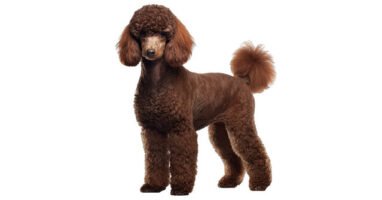
A brindle poodle looks like someone brushed dark stripes through a lighter coat and then curled the whole thing. It is one of the most striking patterns in the breed, and one of the most misunderstood. Owners get asked if the dog is a mix, breeders get asked if it is even real, and groomers get asked where the stripes went after a short clip.
Short answer: brindle is a genuine poodle pattern with defined genetics behind it. This guide covers what the pattern actually is, how it shows up on a curly coat from puppyhood to adulthood, where the registries stand on it, and how to tell a true brindle from the patterns it gets confused with.
What Brindle Actually Is
Brindle is a pattern, not a color and not a breed. Stripes of dark pigment, usually black or brown, run over a lighter base of red, apricot, tan, or cream. The striping can be heavy enough to make the dog look nearly dark, or faint enough that you only catch it when the light hits the coat at an angle.
The genetics are specific. Brindle comes from the kbr allele at the K locus, and it works by switching dark pigment on and off in bands as each hair grows. It can only express when the dog’s other genes allow a patterned base to show, which is why a dog can carry brindle and look completely solid black: dominant black covers the pattern entirely.
That hiding trick explains a lot of brindle surprises. Two solid looking parents, one or both carrying brindle underneath, can produce striped puppies in an otherwise ordinary litter. The pattern also ranks among the rarest poodle colors for exactly this reason: it is hard to breed for what you cannot see.
How Brindle Shows on a Poodle Coat
Poodle curl changes everything about this pattern. In short coated breeds like Boxers, brindle striping sits flat and obvious. On a poodle, each stripe runs through curled hair, so the effect reads more like swirling, smoky banding than clean tiger stripes.
Coat length controls visibility. A shorter clip, around half an inch to an inch all over, shows the striping at its clearest.
Let the coat grow into a long, dense style and the curls blend the bands together until the dog can pass for a shadowy solid at a glance. Part the coat to the skin, though, and the alternating stripes are still there.
Contrast depends on the base color. Black striping over apricot or red is bold and easy to read.
Brown striping over a brown toned base is subtle, sometimes visible only in bright daylight. Puppies usually show their striping early, but the adult coat is denser and curlier, so expect the pattern to soften, and occasionally to sharpen, as the mature coat replaces the puppy fluff during the first year.
Clearing genes can interfere further. A brindle whose coat also carries the fading that produces silver or blue tones may lose contrast as the dark stripes lighten with age. The striping does not vanish, but a high contrast puppy can finish as a much more muted adult.
Brindle or Something Else? Telling the Patterns Apart
Brindle gets mixed up with sable and phantom more than any other patterns, and abstracts cause confusion too. A few simple checks separate them without any DNA test.
Run your fingers against the coat and look at individual hairs. In a brindle, each hair is fully one color or the other, and the stripes are formed by neighboring hairs grouping together across the body. In a sable, every hair is two colors by itself: pale at the root, dark at the tip.
Clip a sable short and the dark tips come off, lightening the whole dog. Clip a brindle short and the striping stays, because it was never only at the tips.
Phantom is a placement question rather than a texture one. Phantom markings appear in fixed locations only: above the eyes, on the muzzle, chest, legs, and under the tail, over an otherwise solid coat. If the striping wanders across the back, ribs, and hips, you are looking at brindle, not phantom.
Abstracts are simpler still. An abstract dog is a solid with a small amount of white, usually on the chest, chin, or toes, and no striping anywhere.
If the second color on the dog is white and sits in one or two small patches, it is abstract, whatever the seller calls it.
Registry Status, Stated Plainly
Here is where brindle talk gets heated, so let us be precise. The AKC poodle standard is written around solid colors for the conformation ring. Brindle poodles can be registered as poodles when their parents are registered, but the pattern is not accepted for AKC conformation showing.
The United Kennel Club takes the other route. Its multicolored poodle standard explicitly includes brindle alongside parti and phantom, and brindle dogs can compete there. The Poodle Club of America, as the AKC parent club, follows the solid color standard.
What this does not mean is that a brindle poodle is unhealthy, impure, or a lesser dog. Registry recognition is a rulebook for the show ring, not a verdict on the animal. It does mean you should ask questions: a breeder selling brindle puppies should be transparent about registration, and able to show pedigrees and DNA results if you want the pattern verified.
Living With the Pattern
Stripes aside, a brindle poodle is a poodle in every practical respect. Coat color and pattern have no known effect on temperament, energy, or trainability, and owners consistently describe the same bright, people focused dog described in our complete poodle breed guide. Anyone claiming brindles are calmer or wilder than solids is inventing it.
Grooming is standard poodle work: brushing several times a week, professional clipping every four to six weeks, and the usual ear and nail care. The pattern adds two quirks.
First, your clip choice is also a pattern choice, since shorter styles show the striping and longer styles mute it. Groomers who have never cut a brindle may need a photo of the look you want.
Second, brindle is a forgiving coat to live with. Dirt and dullness disappear into the striping far better than they do on a white or cream coat. The trade off is that sun can rust the dark stripes toward brown through a summer, and dandruff shows on the dark bands just as it does on a black dog.
On health, the pattern itself carries no known risks. Brindle poodles share the breed’s general predispositions, which can include hip dysplasia, progressive retinal atrophy, Addison’s disease, and von Willebrand’s disease. Those risks are managed by choosing a breeder who health tests, not by choosing a coat, and a vet should always be the reference point for any individual dog’s screening and care.
Finding a Brindle Poodle Without the Markup Trap
Expect a slower search than for a solid color. Few breeders work with brindle, litters are small, and waitlists form. That patience is your protection: sellers with brindle puppies available instantly, at a steep premium, with no paperwork, are exactly the ones to avoid.
Claims here are testable, so test them. A DNA coat color panel shows whether the parents carry kbr, and a breeder confident in their lines will show you results rather than argue.
Meet the mother, look at the pedigrees, and confirm which registry the puppies will be registered with. Our walkthrough of buying a poodle puppy covers the full set of checks.
Price deserves a flat answer. A modest premium for a well bred puppy from health tested parents is normal in any color.
A large premium charged for striping alone is marketing, and the health testing matters more than the pattern ever will. Adult brindles also surface occasionally in poodle rescue, where the striping has usually matured and you can see the finished pattern before you commit.
Frequently Asked Questions
Is a brindle poodle a purebred poodle?
It can be, yes. Brindle is produced by a documented poodle gene, and brindle puppies are born to registered parents. Registration paperwork, or a DNA panel if you want certainty, will confirm any individual dog’s background, because the pattern alone proves nothing either way.
Why did my brindle puppy’s stripes fade?
Two things usually combine: the adult coat grows in denser and curlier, which blends the bands, and any clearing genes in the dog lighten the dark striping over the first two years. Keeping a shorter clip makes the remaining pattern easier to see.
Can two solid colored poodles produce brindle puppies?
Yes. Brindle hides completely under dominant black, so solid looking carriers can pass it on without ever showing a stripe themselves. This is one reason brindle litters often arrive as a surprise.
Are brindle poodles allowed to be shown?
Not in AKC conformation, where the standard covers solid colors. The UKC multicolored division accepts brindle, and brindle poodles can compete in performance sports such as obedience and agility under either registry.
Does brindle affect a poodle’s health or personality?
No. The genes behind the striping are not linked to temperament, and no health conditions are known to travel with the pattern itself. Health depends on the parents and their testing, exactly as it does for a solid colored poodle.
The Bottom Line on Brindle
A brindle poodle is a poodle wearing the breed’s most elusive pattern: genetically real, visually dramatic in a short clip, and easy to live with day to day. If the striping has caught your eye, chase it patiently, verify it with paperwork, and let health testing make the final decision. For the wider context of how brindle sits among all the breed’s shades, our guide to poodle colors explained is the place to start.





3 Comments on “Brindle Poodle: Color, Traits & Facts”