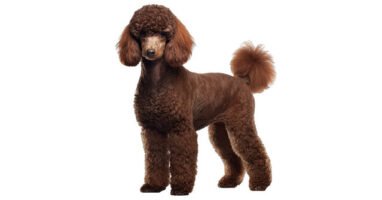
Ask ten owners to describe a Poodle and you will hear the same words: clever, elegant, devoted. All true. What the brochure version leaves out is that this is a gundog athlete in a designer coat, a working breed that needs real exercise, real training, and a serious grooming routine to stay happy.
This guide walks through the whole picture. Where the breed came from, how the three sizes differ in daily life, what the coat actually demands, the health issues worth knowing about, and the homes Poodles genuinely thrive in. Read it before you fall for a puppy photo.
Where the Breed Actually Comes From
The Poodle started in Germany as a duck retriever, not in a French salon. The name traces back to the German word pudel, which describes splashing in water, and splashing out to collect downed waterfowl was the original job.
Even the famous clip began as workwear. Hair was left over the chest and joints for warmth in cold water and clipped short elsewhere to cut drag while swimming. The American Kennel Club still classifies the breed by that sporting heritage, and our guide to Poodle history digs into how a marsh dog ended up in royal courts.
That past explains the modern dog. Retrievers were selected to think, swim, and cooperate with a handler for hours at a stretch. Poodles still look for exactly that kind of partnership today.
Three Sizes That Share One Brain
Kennel clubs recognize three varieties of the same breed, and all three follow one breed standard with one core temperament. What changes is the amount of dog you live with. That affects exercise, feeding, grooming bills, and handling more than most buyers expect.
The FCI recognises four sizes: Standard, Medium, Miniature and Toy. The American Kennel Club recognises three varieties: Standard, Miniature and Toy.
Standard Poodle
Standards stand over 15 inches at the shoulder and commonly weigh 40 to 70 pounds. They are the original size and the most athletic of the three, built for long days outdoors. Our Standard Poodle guide covers this variety in full.
Plan on a secure yard or a genuinely active routine. A Standard in a small flat with an owner who is out all day is a common mismatch, because that energy has to go somewhere.
Miniature Poodle
Miniatures measure 10 to 15 inches and usually weigh 10 to 15 pounds. They keep the Standard’s brains and drive in a body that fits apartments, car seats, and smaller budgets far more easily.
Do not mistake smaller for calmer. A Miniature still wants proper walks, games, and training, and many compete happily in agility and obedience well into old age.
Toy Poodle
Toys stay under 10 inches and weigh just 4 to 6 pounds. They suit city living and owners who want a dog that can travel in a carrier, and they tend to bond intensely with one or two people.
The trade off is fragility. Toys are easily hurt by falls, rough play, or a toddler’s enthusiastic hug, so they fit best in calm homes with older children or adults only.
Worth knowing: a fourth size, often called the Moyen or medium, sits between Miniature and Standard. It is recognized in much of Europe and gaining fans in North America, though the AKC does not list it as a separate variety.
The Coat Everyone Talks About
Poodle hair grows continuously and curls tightly, so loose strands get caught in the coat instead of dropping onto your furniture. That is why the breed sheds so little, and why many people with dog allergies cope better around Poodles than around most breeds.
Be clear on the limit, though. No breed is completely allergen free, because dander and saliva still carry allergens. Anyone with serious allergies should spend time around adult Poodles before committing to one.
Colors run from black, white, and cream to silver, apricot, and red, plus patterned coats such as parti and phantom. Color is cosmetic. Health and temperament matter far more when you are choosing a puppy.
The cost of that famous coat is upkeep. Left unclipped it cords and mats, and a long coat needs brushing down to the skin several times a week to stay comfortable.
For a fuller breakdown of grooming, food and vet costs, see our guide to how much a Poodle costs.
Brains, Sensitivity, and a Clown Streak
Poodles rank among the most intelligent of all dog breeds, and they are unusually tuned in to their people. Most are playful, proud, and quietly funny, with a habit of watching the household and inserting themselves into whatever is happening.
Stanley Coren placed the Poodle second in his ranking of breeds for obedience and working intelligence, after the Border Collie. See the AKC summary of Coren’s ranking.
The catch is that a clever dog notices everything, including your inconsistencies. Boredom and mixed signals produce barking, chewing, and creative mischief faster in this breed than in most. Our Poodle temperament guide goes deeper into what living with that mind is really like.
Exercise: The Numbers by Size
Daily targets differ by size, and they are higher than the elegant image suggests:
- Standard: 60 to 90 minutes of solid activity
- Miniature: 45 to 60 minutes
- Toy: around 30 minutes, split into shorter sessions
Retrieving games, swimming, and training sessions count double because they work the brain at the same time. Ten minutes of focused training can settle a Poodle more completely than a long, aimless walk.
Grooming: The Standing Appointment
Budget for a professional groom every four to six weeks, or learn to clip at home. Sessions commonly run 50 to 90 dollars depending on size, coat length, and your area, so this is a real line in the yearly budget rather than an occasional treat.
Between appointments, brush a longer coat every day or two, or keep a short clip if you want the easy version of this breed. Our at home grooming guide walks through the tools and the routine step by step.
Check the floppy ears weekly while you are at it. Hair grows inside the canal, moisture gets trapped, and ear infections are among the most common reasons Poodles end up at the vet. VCA Animal Hospitals outlines the breed’s typical ear and skin issues in its breed profile.
Feeding Without Overthinking It
Feed a complete diet matched to size and life stage, measure the portions, and adjust so the ribs stay easy to feel under a thin layer of fat. Puppy, adult, and senior formulas exist because calorie and protein needs genuinely change with age.
Treats count too. Training rewards add up fast in a breed you will be training daily, so take them out of the day’s food allowance instead of piling them on top of full meals.
Health Watch Outs and How Long They Live
Poodles are a comparatively healthy, long lived breed, but each size carries predispositions worth knowing before you buy. Standards face higher rates of hip dysplasia, Addison’s disease, and bloat, a stomach emergency that needs a vet within the hour, not in the morning.
Miniatures and Toys more often deal with slipping kneecaps, crowded teeth, and progressive retinal atrophy, an inherited eye disease that can lead to blindness. Reputable breeders screen for these conditions and will show you the paperwork without being asked twice.
Ask for the size-specific tests the Poodle Club of America lists: DNA testing for prcd-PRA, yearly eye exams and patellar checks for Toys and Miniatures, hip scoring added for Miniatures, and hip scoring, eye exams and thyroid, sebaceous adenitis or heart checks for Standards, plus DNA tests for neonatal encephalopathy and von Willebrand disease. Results are recorded with the OFA under its CHIC programme. See the PCA health screening list.
Expect roughly 10 to 12 years from a Standard and 12 to 15 or more from Miniatures and Toys. Weight control, dental care, and regular checkups do more for those numbers than any supplement on the shelf.
Training: Easy to Teach, Easy to Spoil
Poodles learn cues in a handful of repetitions and read body language closely, so reward based training moves fast with them. Keep sessions short, end while the dog is still keen, and rotate games so practice never turns into drilling.
Start socialization in the first weeks at home: different people, traffic sounds, other dogs, handling at the vet and the groomer. A well socialized Poodle grows up confident, while an under socialized one can turn shy or reactive despite all that intelligence.
Getting a Poodle the Right Way
Buy from a breeder who health tests, raises puppies in the home, and expects as many questions from you as you have from them. Avoid pet stores and any seller who cannot show you the mother or the health records.
Rescue is a real option too. Poodles and Poodle mixes land in shelters and breed rescues more often than people expect, and the ASPCA adoption resources can point you toward dogs near you.
Who Should Get One, and Who Should Not
Run this quick self test before you commit. If the self test leaves you unsure, our pros and cons of owning a poodle work through the same decision in full, including the cases where a poodle is the wrong choice. A Poodle probably suits you if:
- You want a dog involved in daily life, not an independent one
- You can walk, play, and train for an hour a day, or pay someone who will
- Grooming bills or learning to clip at home genuinely do not bother you
- Your home is fairly calm and your schedule is predictable
Think twice if:
- The house sits empty for long stretches every day
- You want a low maintenance coat above all else
- Toddlers will be handling the dog, especially a Toy
- You cannot stand barking and will not commit to training
Frequently Asked Questions
Are Poodles good family dogs?
Yes, in most homes. Standards and Miniatures are sturdy, playful, and patient with respectful children. Toys are wonderful with older kids but too fragile for toddlers, and every dog and child pairing needs supervision.
Do Poodles shed?
Very little compared with most breeds. Loose hair stays trapped in the curls instead of falling around the house, which is also why the coat mats so readily without brushing. Shedding less is not the same as being allergen free.
How much grooming does a Poodle really need?
A professional clip every four to six weeks, plus brushing at home between appointments if the coat is kept long. A short utility clip cuts the home workload dramatically and is the setup most pet owners settle on.
Are Poodles easy to train?
Usually, yes. They learn quickly and enjoy the work, which makes them forgiving dogs for first time owners who train consistently. The risk is the opposite of stubbornness: a smart dog trains you back if the rules keep changing.
Can Poodles live in apartments?
Miniatures and Toys adapt very well to apartment life if their exercise and company needs are met. Standards can manage too, but they need space to move and owners who genuinely deliver the daily activity.
How long do Poodles live?
Standards typically live 10 to 12 years, while Miniatures and Toys often reach 12 to 15 and sometimes beyond. They are one of the longer lived breeds, which is worth factoring into the commitment.



10 Comments on “Poodle Dog Breed Complete Guide : Your Key to the Perfect Family Companion”