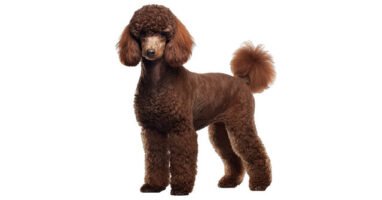
Poodles have a well earned reputation as one of the healthier pedigree breeds, and plenty stay sprightly well into their teens. That does not give the breed a free pass: every variety carries inherited weak spots, and the owners who cope best are the ones who knew them before anything went wrong.
This guide works through the conditions that show up in poodles most often, one at a time: what each one is, the signs owners notice first, which sizes it favours, and what a vet does about it.
Why Poodles Get These Problems
Most of these conditions trace back to genetics and a limited gene pool, which is why tested breeding moves the needle: breeders who screen hips, eyes, and DNA before mating produce far fewer affected puppies. That paperwork matters enormously when buying a poodle puppy.
Size steers the risk, too. Standards wrestle with big dog problems like hip dysplasia and bloat, while Toys and Miniatures collect the small dog set: slipping kneecaps, fragile hip joints, crowded teeth. Our companion guide breaks down health problems by poodle size if you prefer that view.
Hip Dysplasia
Hip dysplasia is a hip joint that never quite fits together: the ball sits loosely in the socket, the joint grinds instead of gliding, and arthritis builds up over the years. It is mainly a Standard poodle problem, though Miniatures are not immune.
Early signs are easy to miss: a puppy that bunny hops when running, an adult that hesitates before jumping into the car, stiffness after a long walk. A vet confirms it with X-rays, and treatment depends on severity and age, ranging from weight control and physiotherapy through to surgery in bad cases.
At home, keep a young Standard lean: extra kilos on a loose hip do real damage, while a slim dog often copes comfortably for years.
Patellar Luxation (Slipping Kneecap)
Patellar luxation means the kneecap pops out of its shallow groove, usually towards the inside of the leg. It is the signature joint problem of Toy and Miniature poodles.
The classic sign is a dog that suddenly skips, holds a back leg up for a few strides, then trots on as if nothing happened. Vets grade luxation from 1 to 4: grades 1 and 2 often just need monitoring, sensible weight, and muscle building exercise.
Grades 3 and 4, where the kneecap spends most of its time out of place, usually need surgery to deepen the groove and realign the leg.
Legg-Calvé-Perthes Disease
This condition strikes the hip joint of young small poodles, most often between 4 and 12 months old. The blood supply to the top of the thigh bone falters, the bone weakens and collapses, and the joint becomes painful.
Owners usually notice a puppy going progressively lame on one back leg. It often looks like a simple sprain at first, which is why a limping puppy always deserves X-rays.
The usual fix is a surgery called femoral head ostectomy: the damaged ball of the joint is removed, the body forms a false joint from scar tissue, and small dogs typically return to completely normal activity.
Progressive Retinal Atrophy (PRA)
PRA is a family of inherited conditions that slowly destroy the light sensitive cells of the retina in all three poodle sizes, and no treatment currently stops it.
Night blindness is usually the first clue: a dog that once moved confidently in a dim room starts hesitating, bumping into furniture at dusk, or refusing walks after dark. Day vision fades later, and many affected dogs eventually lose their sight.
The hopeful part is prevention: a DNA test identifies carriers, and responsible breeders do not mate two carriers together. Dogs that do go blind adapt better than owners expect.
Cataracts
A cataract is a lens that has gone cloudy, blocking light from reaching the retina, and poodles get them two ways: as part of ageing, and as an inherited juvenile form in young dogs.
Look for a bluish grey or white sheen in the pupil, and a dog that starts misjudging steps. Not every cloudy eye is a cataract, though: older dogs commonly develop a harmless haze called nuclear sclerosis, which looks similar but barely affects vision.
Only an eye exam can tell the two apart, and when cataracts do steal vision, surgery to remove the lens frequently restores useful sight.
Glaucoma: The Eye Emergency
Glaucoma means pressure building inside the eye, squeezing the optic nerve and retina. Poodles, Standards in particular, can be predisposed, and it is painful as well as blinding: a red, watery, or cloudy eye, a pupil that stays wide, a dog that squints or rubs its face.
Treat those signs as a same day emergency. Pressure controlled early can save the eye, while a delay of a day or two often means the vision in that eye is gone for good.
Addison’s Disease
Addison’s disease means the adrenal glands are not producing enough of the hormones that manage stress, salt balance, and blood pressure. Standard poodles are one of the breeds most associated with it, though Miniatures get it too.
Vets nicknamed it the great pretender because the early signs could be almost anything: tiredness, a picky appetite, occasional vomiting or diarrhoea, a dog that seems flat and then perks up again.
It takes a specific blood test, the ACTH stimulation test, to confirm it, and the good news is that treatment works beautifully. Dogs on lifelong hormone replacement, checked with regular blood work, typically live normal, energetic lives. Cornell’s guide to Addison’s disease is worth reading if your vet ever raises the possibility.
Hypothyroidism and Diabetes
An underactive thyroid slows the whole system down: a middle aged poodle gaining weight on unchanged food, sleeping more, losing coat quality, and seeking out warm spots. Because those signs overlap with plain ageing, diagnosis needs a blood panel rather than guesswork.
Treatment is one of the easiest in this guide: a daily tablet, periodic blood tests to check the dose, and most dogs brighten within weeks.
Diabetes is the other metabolic regular. Too little insulin, or a body that stops responding to it, shows up as drinking far more water, urinating more, and losing weight despite eating well. Management is daily insulin, consistent meals, and glucose monitoring organised with your vet, and diabetic dogs on that routine do well for years.
Sebaceous Adenitis
This is the poodle specific skin disease on the list, seen mostly in Standards, where the immune system attacks the glands that oil the skin and coat.
Signs include heavy scaling, hair coming out in clumps, a dry moth eaten look, and sometimes a musty smell. A skin biopsy confirms it, since allergies look similar, and while there is no cure, oil soaks, medicated shampoos, and careful moisturising keep managed dogs comfortable.
Allergies and Itchy Skin
Poodles are often chosen by allergy sufferers for their low shedding coat, but no dog is truly hypoallergenic, a point we unpack in our guide to whether poodles are hypoallergenic.
Environmental allergies to pollen, dust mites, or moulds are the usual culprits, showing up as scratching, paw chewing, and sore skin. Food reactions exist but are less common than most owners assume, and they cannot be pinned down by guesswork or hair tests. Expect your vet to work through flea control, skin infections, and diet methodically before landing on long term medication.
Epilepsy
Idiopathic epilepsy means seizures that arrive without a structural cause anyone can find, and poodles, Standards especially, carry a recognised predisposition. First episodes usually appear between six months and six years of age.
Seizures vary enormously: some dogs have full convulsions with paddling legs and drooling, while others have brief focal episodes, a stare, a twitch, a few seconds of seeming absence.
Your job during an episode is unglamorous but vital: keep the dog safe, time it, and film it if you can, because that footage genuinely helps your vet. Most recurrent cases are managed with daily medication, and affected dogs usually live normal lives between episodes.
Intervertebral Disc Disease (IVDD)
IVDD is a spinal disc problem: the discs cushioning the vertebrae harden and bulge or burst, pressing on the spinal cord. Famous in long backed breeds, it affects Miniature and Toy poodles too.
Back pain is the first sign for most dogs: a hunched posture, a yelp when picked up, reluctance to jump or climb stairs. Mild cases are often managed with strict rest and anti-inflammatory medication.
Severe cases progress to wobbly legs or paralysis, which is an emergency: dogs that lose leg function usually need surgery, and speed matters, so back pain in a small poodle should never wait until Monday.
Bloat (GDV): The One Emergency to Memorise
Gastric dilatation-volvulus is where the stomach fills with gas and twists shut, trapping the gas and cutting off blood flow, a risk that comes with the Standard’s deep chest.
Learn the signs: a swelling, tight abdomen, retching that produces nothing, pacing, drooling, and a dog that cannot settle. This is a drive to the emergency vet now situation, because without surgery GDV is usually fatal within hours.
Prevention helps at the margins: two or three smaller meals instead of one huge one, calm around mealtimes, no vigorous exercise right after eating. Many vets also discuss gastropexy, surgically tacking the stomach to the body wall. Cornell University’s GDV guide covers the condition and the surgery in plain language.
The Problems Owners Actually See Most
For all the serious names above, the conditions that fill most poodle vet diaries are mundane: ears and teeth. Poodles grow hair inside the ear canal and wear floppy ear flaps over it, a combination that traps moisture and grows infections, as our guide to poodle ear infections explains.
Teeth are the other slow burn. Small poodles pack a full set of teeth into tiny jaws, plaque hardens fast, and dental disease creeps in quietly until the breath or a loose tooth announces it.
Screening, Checkups, and Catching Things Early
Prevention comes in three layers, starting with breeding: the American Kennel Club and the breed clubs publish the screening tests recommended for each size, and a good breeder shows you the results without being asked twice.
The second layer is the routine vet rhythm: a full checkup at least once a year for adults, twice a year for seniors, with blood work as your vet advises.
The third layer is you. A monthly five minute once over covers most of it: feel for lumps, look in the ears, lift the lips to check teeth and gums, and watch the dog trot away from you.
Changes in thirst, appetite, energy, or coat are data. Write them down and mention them at the next visit, because the dogs who do best are almost always the ones whose owners noticed early.
Frequently Asked Questions
What is the most common health problem in poodles overall?
Day to day, ear infections and dental disease top the list across all sizes. Among inherited conditions, the headline names are hip dysplasia in Standards and slipping kneecaps in Toys and Miniatures.
How often should a healthy adult poodle see the vet?
Once a year for a full checkup is the baseline for adults, moving to twice a year for seniors or any dog managing a chronic condition.
My poodle seems fine. Should I still think about Addison’s disease?
Worry is the wrong word, but awareness helps, especially with Standards. If your poodle has repeated unexplained episodes of tiredness or stomach trouble, it is worth raising the condition by name with your vet.
Knowing the List Is Most of the Battle
Read top to bottom, this page can look alarming, but these are predispositions, not predictions, and most poodles will never develop most of them.
What the list gives you is a watch list. Buy from a breeder who screens, keep the routine vet visits, learn the emergencies that cannot wait, and your poodle’s odds of a long, comfortable life are genuinely good.




21 Comments on “Common Poodle Health Problems Every Owner Should Know”