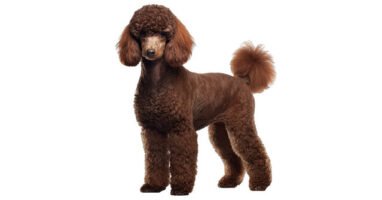
People expect the Poodle temperament to match the haircut: fussy, aloof, a bit precious. Owners know better. The typical Poodle is sharp, funny, deeply attached to its people, and busy from morning to night.
That combination is wonderful in the right home and wearing in the wrong one. Here is how Poodle personality actually plays out day to day, including the parts most breed descriptions politely skip.
A Working Dog’s Personality
Poodles were developed in Germany to retrieve waterfowl, working at a hunter’s side all day in cold water and rough ground. The job selected for brains, stamina, and a strong wish to cooperate with a person, and those three traits still run the breed.
Our Poodle history guide traces how that working past got buried under the show ring image. It never disappeared, though. It is why Poodles look restless in homes that expected a decorative dog: the mind is waiting for instructions, and it relaxes the moment it gets some.
Intelligence Cuts Both Ways
Poodles sit near the top of every serious attempt to rank canine learning ability, and daily life backs the ranking up. They pick up new cues in a few repetitions and remember routines, yours included, with embarrassing accuracy.
The same brain keeps score of loopholes. Feed from the table once and you have trained a beggar. Let a rule slide when guests visit and your Poodle will test it again tomorrow, just to check whether the exception still applies.
Boredom is the other side of the coin. An under occupied Poodle does not switch off; it self employs, and a bored Poodle will find its own job. The work usually involves bins, counters, laundry baskets, or your favorite shoes.
The Attachment Is Real
Poodles bond hard and prefer to operate as your shadow. Room to room following is standard behavior, and many lean against legs, rest a chin on your foot, or supervise your bath with genuine concern.
That devotion has a cost. The breed is prone to separation anxiety when alone time is never practiced, and it shows up as barking, pacing, or destructive chewing rather than quiet misery. The ASPCA’s separation anxiety guidance explains how gradual alone time training prevents most cases before they start.
Short, boring departures from puppyhood onward teach the dog that people always come back. Building that trust early is far easier than repairing anxiety in an adult dog.
Energy: Athlete, Not Ornament
Expect a dog that wants to move. Standards need 60 to 90 minutes of real activity a day, Miniatures around 45 to 60, and Toys roughly 30, ideally mixed with games that make them think as well as run.
Fetch, swimming, and hiking suit the retriever heritage, and dog sports such as agility or rally burn mental energy even better than plain walking. A Poodle that only gets a slow lap around the block often comes home more wound up than it left.
Playfulness That Never Really Retires
One trait surprises people who meet older Poodles: the playfulness stays. A ten year old Standard may move more carefully, but offer a favorite game and the puppyish spark is still there, just rationed.
Owners often describe a deliberate sense of humor: toys dropped in front of guests, invented games with clear rules the dog expects you to learn, and theatrical sighs when the household fails to provide entertainment. It is manipulation, but it is charming manipulation.
Sensitivity Is the Trait Nobody Warns You About
Poodles read tone, routine, and body language with unusual precision. A tense house makes a tense Poodle. Raised voices, chaotic schedules, and unpredictable rules all register, and the dog’s behavior usually shows it before the people in the house admit anything is wrong.
Handled gently, that same sensitivity becomes something close to empathy. Owners consistently describe Poodles gravitating toward the upset person in the room and settling in quietly beside them, uninvited and exactly right.
It also means harsh training backfires. Corrections a tougher breed shrugs off can make a Poodle shut down or turn anxious, while clear, kind repetition gets fast and lasting results.
Social Skills Are Built Early
Well bred Poodles start out friendly, but confidence is trained, not guaranteed. Puppies need steady, positive exposure to strangers, children, other dogs, traffic, and being handled by vets and groomers during their first months at home.
Skip that window and the breed’s natural watchfulness can harden into shyness or reactivity. Puppy classes earn their fee twice over with this breed, because you get manners and social confidence in the same hour.
Same Breed, Three Temperaments
The core personality is shared across all three sizes, but the flavor shifts more than most buyers expect. Our size by size comparison breaks down the practical differences in detail.
Standard Poodles
Standards are generally the steadiest of the three: confident, patient, and slower to rattle. They read as dignified adults, although young Standards are boisterous and need a year or two to grow into that famous calm.
Miniature Poodles
Miniatures are the comedians and watchdogs of the family: alert, quick, and often the most vocal. They bond tightly, stay busy, and keep their spark well into old age.
Toy Poodles
Toys are just as clever and devoted, but small bodies make the world bigger and scarier. Toys that are carried everywhere and never trained can turn anxious or snappy, while Toys raised like real dogs, with boundaries and time on their own four feet, are charming and confident.
When the Mood Changes, Check the Body First
A sudden temperament shift in an adult Poodle is a vet visit, not a training problem, until proven otherwise. Pain, ear infections, thyroid trouble, and failing eyesight all change behavior, and this breed is stoic enough to hide discomfort for a long while.
The Poodle Club of America health pages list the conditions each variety is screened for, and the AKC breed page summarizes the common ones. Snappiness, withdrawal, or new noise sensitivity in a previously easy dog deserves a checkup before any behavior plan.
A Matted Coat Can Look Like a Bad Mood
Grooming belongs in a temperament discussion for one simple reason: matting hurts. Tight mats pull at the skin constantly, and a dog living with that discomfort can turn irritable, head shy, or reluctant to be touched at all.
Regular brushing and a clip every four to six weeks prevent the problem entirely, and grooming started young becomes a routine most Poodles accept calmly. Our home grooming guide covers the handling side of the job as well as the tools.
Mistakes That Bring Out the Worst in This Breed
Most problem Poodles are made, not born. The same handful of owner mistakes sits behind the majority of behavior complaints:
- Treating the dog as an ornament and skipping training because it is small or pretty
- Rules that change by the day, the room, or which family member is watching
- Carrying a Toy everywhere instead of letting it walk, sniff, and be a dog
- Leaving a young Poodle alone for long days with no build up and no midday break
- Shouting corrections at a dog that shuts down under pressure
None of these take much effort to avoid. They just have to be avoided from the first week, because habits in this breed set quickly in both directions.
Frequently Asked Questions
Are Poodles clingy?
Compared with most breeds, yes. They prefer to be in the same room as their people and often follow from room to room. Owners who want an independent dog that entertains itself should probably look elsewhere.
Do Poodles bark a lot?
They are alert and will announce visitors, and Miniatures tend to be the most vocal of the three sizes. Barking becomes a real problem mainly in bored or under exercised dogs, so training and activity solve most of it.
Are Poodles naturally aggressive?
No. A well bred, well socialized Poodle is typically friendly and even tempered. Aggression in this breed almost always traces back to poor breeding, missed socialization, fear, or pain, and it deserves professional help to find the actual cause.
Are Poodles good with strangers?
Most are polite and many are outright friendly, though some are reserved at first meeting. Early socialization makes the biggest difference. A Poodle that met plenty of visitors as a puppy usually greets new people with confidence.
Is a Poodle too much dog for a first time owner?
Not for a prepared one. The trainability genuinely helps beginners, but the exercise, mental stimulation, and grooming commitments are real. First timers who plan for classes and a grooming routine from day one usually do very well.
The Short Version
Poodle temperament is a working dog’s temperament in a glamorous package: intelligent, sensitive, athletic, and happiest with a person to partner with. Homes that offer training, company, and activity get a remarkable dog for their trouble.
Homes that wanted a low effort ornament tend to struggle, through no fault of the dog. For the full breed picture, sizes, coat, health, and costs included, start with our complete Poodle breed guide.




13 Comments on “Poodle Temperament: What to Expect from Their Personality”