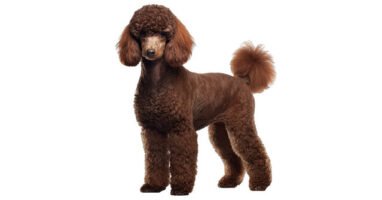
The pampered lap dog image has followed poodles around for a century, and it is wrong. This is a retriever, built to work in cold water all day, and the engine is still there under the haircut. Owners usually discover this the hard way, through chewed skirting boards and a dog doing laps of the sofa at nine in the evening.
The fix is rarely more discipline. It is enough of the right exercise, physical and mental, matched to your poodle’s size and age. Here are the daily targets that work for most poodles, the activities that suit the breed best, and the signs that you are underdoing it or overdoing it.
How Much Exercise, by Size
The three sizes are the same dog at different scales, and their needs are closer than people expect. Pace matters more than leg length. A Toy trotting briskly beside you is working just as honestly as a Standard doing the same.
Toy Poodles: 30 to 45 Minutes
Real exercise, not just a wander to the corner and back. A brisk walk, lively indoor play, or a mix of both covers it.
Small is not fragile: Toys are quick, sturdy little athletes that genuinely enjoy being busy. Split the total into shorter sessions, take heat seriously because small dogs overheat fast, and judge by the dog in front of you rather than the clock.
Miniature Poodles: 45 to 60 Minutes
The Miniature is pound for pound the sportiest of the three, and the one most likely to ask what is next when the walk ends. Many thrive on agility and similar sports, which spend mental energy as well as physical. A Miniature with a job to do is a noticeably easier dog to share a house with.
Standard Poodles: 60 to 90 Minutes
Split it across the day. One gentle stroll will not touch the sides of a dog built for field work; Standards need brisk walking, running, swimming, or proper structured play to settle.
This is also the size where under-exercise most often gets misread as a behavior problem. Chewing, barking at everything, and general mayhem in a Standard are frequently just an energy surplus, a point our Standard Poodle guide explores in more depth.
Adjusting for Age
Puppies: Protect the Joints First
Growing bones have soft growth plates, and forced exercise is how they get hurt. The widely used guideline is five minutes of structured exercise per month of age, up to twice a day. A four month old puppy gets about 20 minutes of lead walking per session, not an afternoon hike.
That limit is for exercise you control: lead walks and repetitive fetch. Free play, where the puppy runs, stops, and flops down on its own schedule, is fine in sensible amounts and good for development. Save the long hikes, stair sessions, and marathon fetch games until growth plates close, at around 12 months for Toys and Miniatures and 14 to 18 months for Standards.
Adolescents: The High Energy Window
Somewhere between six months and two years, your poodle will have more energy than either of you knows what to do with. Aim for 30 to 60 minutes a day and spend it deliberately: walks, play, training, a first introduction to swimming or sport foundations.
Owners who channel this phase end up with a mannerly adult. Owners who try to wait it out from the sofa rarely do.
Adults: The Straightforward Years
From roughly two to seven years, just hit the daily target for your poodle’s size and mix the types of exercise across the week. This is the easy phase, and consistency here is what stops most behavior problems from ever starting.
One caveat applies at every age: a poodle can be physically tired and still wired if its brain has done nothing all day. Running alone is not the whole answer for a breed this clever. Body and mind, both, every day.
Seniors: Less Intensity, Not Less Movement
From about seven onward, keep the daily habit and soften it rather than dropping it. Two or three gentle walks of 15 to 20 minutes suit most seniors better than one long outing. Swimming is gold for arthritic dogs, because the muscles work hard while the joints are spared.
Stiffness after rest, hesitating at stairs, or trailing behind on familiar routes are all worth mentioning to your vet. They are not always just age, and some causes are very treatable. Keeping a senior moving comfortably is one of the kindest things an owner can do.
The Brain Needs a Workout Too
Poodles sit near the top of every canine intelligence ranking, and a bored poodle manufactures its own entertainment. Usually out of your belongings, and usually at the exact moment you sit down.
Training is exercise. Ten minutes of practicing cues, tricks, or a brand new skill tires a poodle in a way an extra lap of the block does not.
Puzzle feeders turn dinner into a job. Scent games, hiding treats or a favorite toy around the house and garden, tap straight into the retriever’s nose and leave dogs genuinely satisfied.
Our guide on how to train a poodle puppy shows how to build these habits from the start, though adult dogs take to them just as fast. Owners consistently notice the difference on days with even five minutes of training worked in: calmer evenings and less nuisance noise. If the noise is the problem at your house, our article on why poodles bark helps separate boredom barking from the other kinds.
Activities That Suit the Breed
Rotate rather than repeat. The same walk at the same pace becomes background noise to a clever dog. Variety is what keeps them engaged.
Brisk walking is the base layer: a pace where your poodle trots instead of ambles, on routes that change often enough to offer new smells. Fetch plays to the retrieving instinct, especially in Standards and Miniatures.
Swimming is the ancestral sport, and most poodles take to water happily. Start in calm shallows, never throw a nervous dog in, and dry the ears properly afterwards.
Agility, rally, and dock diving suit the athletic sizes and give the brain a job with rules. Hiking works for fit adult Standards and Miniatures, with distance built up gradually.
Toys can join longer outings with a dog backpack carrier, walking the fun stretches and riding the rest. At home, tug games, a flirt pole, and a hallway obstacle course cover the rainy days.
The breed overview below gives a good sense of the poodle’s energy and lifestyle in action, if you want to see the temperament this all adds up to.
Reading the Dials: Too Little, Too Much
Too little announces itself clearly. Destructive chewing, hyperactivity in the evenings, weight creeping up, and attention seeking that borders on performance art all point the same way.
Before blaming your poodle’s character, audit the last week honestly. Most poodle behavior problems shrink fast once the exercise target is actually being met.
Too much exercise has tells as well. Panting that does not settle with rest, lagging behind, limping, stiffness the next day, or a dog suddenly reluctant to head out at all.
Puppies are the easiest to overdo because they will keep going long past sensible limits if you let them. Heat overrides every plan: exercise in the cooler hours, carry water, and cut sessions short on hot days.
Safety Basics Worth the Thirty Seconds
Warm up with a few easy minutes of walking before anything intense, and cool down the same way. Keep vigorous exercise at least an hour away from meals. Bloat is a genuine risk in deep chested Standards, and hard running on a full stomach is a combination worth avoiding.
Test pavement with the back of your hand in summer; if it is too hot for your skin, it is too hot for paw pads. Rinse road salt off paws after winter walks.
And be honest about your poodle’s recall and manners before using off lead areas, for their safety and everyone else’s. The American Kennel Club and PetMD both keep practical exercise and safety guidance worth reading alongside your vet’s advice.
What a Good Day Looks Like
For an adult Standard: a 30 minute brisk walk in the morning, 20 minutes of fetch or training at midday, and a 30 minute evening walk or swim, with meals served in a puzzle feeder. For an adult Miniature: a 25 minute morning walk, 15 minutes of afternoon play or training, and a 20 minute evening walk. For an adult Toy: a 20 minute morning walk, indoor games and training at midday, and a gentle 15 minute stroll to finish the day.
Treat those as starting points to adjust to the dog you actually have, not prescriptions. When in doubt, ask your vet. Food fuels all of this activity, so our guide to the best dog food for poodles is worth a look if you are setting up a routine from scratch.
Frequently Asked Questions
How much exercise does a poodle need per day?
It depends on size and age. As a working guide: Toys need 30 to 45 minutes, Miniatures 45 to 60 minutes, and Standards 60 to 90 minutes. Puppies need far less structured exercise, and seniors need the same habit at a gentler intensity.
Can poodles live happily in an apartment?
Yes, provided the exercise and mental stimulation actually happen. Poodles adapt well to smaller homes when their needs are met. Plenty of city poodles with a real routine are calmer than suburban ones with a big yard and nothing to do in it.
Is running with my poodle okay?
Healthy adult Standards and Miniatures make excellent running partners once they are fully grown. Build the distance gradually, favor softer surfaces, and skip runs in the heat. Toys are generally better suited to brisk walking than sustained running.
How do I exercise my poodle when the weather is awful?
Bring it indoors. Training sessions, puzzle toys, scent games, and a few rounds of fetch down a hallway all count. Mental work matters double on days when outdoor time is cut short.
Why is my poodle still hyper after a long walk?
Usually one of two reasons: the pace was a stroll rather than real exercise, or the brain got no workout even though the legs did. Add training, play, or a brisker pace and watch whether the evenings calm down.
At what age can my poodle puppy go on long hikes?
Wait until the growth plates have closed: around 12 months for Toys and Miniatures, and 14 to 18 months for Standards. Build distance gradually from there, and check with your vet if you are unsure where your puppy stands.