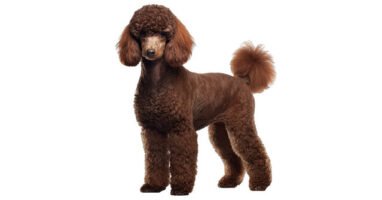
The honest answer is yes, poodles can be excellent with children, but “children” covers a huge range, and the match depends less on the dog than on the age of the child standing in front of it. A poodle that is a dream companion for a ten year old can be a stressful, risky pairing with a toddler, and the other way round is rarely true.
So instead of one verdict, this guide works through it the way it actually plays out at home: babies and toddlers, preschoolers, school age children, and teenagers, then size choice within each, the supervision rules that keep everyone safe, and how to teach both sides of the relationship.
Babies and Toddlers (Under 3): Management Mode
Be clear eyed about this stage: toddlers are, from a dog’s perspective, small unpredictable creatures who move jerkily, shriek at exciting moments, grab fur, and fall over onto sleeping animals. Almost no dog of any breed finds toddlers relaxing.
That does not rule poodles out. A steady standard poodle, properly introduced and always supervised, can live contentedly alongside a toddler. But the honest description of this stage is management, not friendship: barriers up, interactions short and structured, the dog always free to leave.
Toy poodles are the exception worth stating plainly. A toy weighs very little, has fine bones, and can be seriously hurt by a well meaning toddler hug or a short fall.
Toys are also the size most likely to snap from fear when cornered. For an under threes household, a toy poodle is the wrong size; a standard is the sensible choice, and waiting a couple of years is sometimes the kindest option of all.
Preschoolers (3 to 5): Short, Supervised, Structured
Preschoolers can learn simple dog rules and genuinely enjoy a poodle’s company, but their impulse control is still under construction. They run, they squeal, they invite the dog into games that escalate fast.
Keep interactions brief and calm by design: helping with gentle brushing, rolling a ball slowly along the floor, practising a sit for treats with an adult’s hand guiding. Five good minutes beat an hour of climbing chaos.
Miniatures become a reasonable option at this age for calmer children, though a standard still forgives more. Whatever the size, the dog needs a child free retreat, a bed or crate area that children are taught is absolutely off limits.
School Age Children (6 to 11): The Sweet Spot
This is where poodles and children shine together. A child of seven or eight can understand a dog’s body language, follow handling rules reliably, and take real part in care and training. Poodles, in turn, adore having a devoted playmate with endless energy for fetch and trick training.
School age children can feed under supervision, manage simple training cues, and join walks with an adult. Many lifelong dog people trace the obsession to exactly this pairing: a clever dog and a kid with time.
Miniatures suit this age group particularly well, big enough for rough and tumble games, small enough for a child to handle on a lead with backup. Standards remain wonderful, and even toys can work with gentle, dog savvy older children in this range.
Teenagers: A Genuine Partnership
Teenagers can take near full responsibility: full walks, training sessions, grooming help, even junior handling or agility with a sporty miniature or standard. For a teenager, a poodle can be a best friend and a first real responsibility in one.
The caveat is honesty about schedules. Exam years and social lives expand quickly, so a family poodle should belong to the whole household, with adults as the backstop, rather than resting entirely on one teen’s routine.
Choosing a Size With Children in Mind
Standards are the default family recommendation: sturdy, patient, confident, and too big for a child to injure by accident. Their one hazard is enthusiasm, since a joyful standard can bowl a small child over without noticing, which is another argument for supervision rather than against the size.
Miniatures are the middle path, robust and portable, excellent for families with children roughly five and up. Toys belong with calm older children and teenagers, full stop.
The breed’s underlying character is the same across sizes: playful, sensitive, tuned in to the emotional weather of the house. That sensitivity, explored in our poodle temperament guide, is why poodles often seek out an upset child for quiet company, and also why relentless household chaos wears them down.
The Supervision Rules (Non-Negotiable)
- Active supervision means eyes on the interaction. Being in the same room while looking at a phone is proximity, not supervision. Children under about ten should not be alone with any dog, of any breed, however trusted.
- The dog can always leave. Never let a child follow a retreating dog, corner it, or disturb it in its bed, crate, or chosen quiet spot. Most bites to children involve familiar dogs and ignored exits.
- Food and chews are dog only zones. No approaching a poodle that is eating or working on a valued chew. Resource guarding is prevented far more easily than it is treated.
- Learn the early warnings together. Lip licking, yawning when not tired, turning the head away, a suddenly stiff or still body: these are a dog asking politely for space. Teach children to spot them and to back off, and never punish a growl, which is the warning system working as it should.
The AVMA’s guidance on dog bite prevention makes the same points, and it is worth a read for any family before the dog comes home. The ASPCA children and dogs page adds practical scripts for teaching kids how to greet and handle dogs safely.
Rules for the Children, Not Just the Dog
Half of this equation gets trained on two legs. Children should approach calmly and let the poodle choose to come closer, not rush in for a hug. Petting along the back and chest is welcome; hugging around the neck, pulling ears or coat, and riding or leaning on the dog are not.
Running and screaming around the dog winds everyone up, including the dog, so exciting games belong outdoors with an adult refereeing. And waking a sleeping dog is off limits for every age, because startled dogs can snap before they are properly awake.
The AKC’s resources on kids and dogs offer age by age activity ideas that build exactly these habits, from treat delivery games for little ones to full training roles for older children.
Training the Poodle for Family Life
For a family poodle, the basics are safety equipment rather than party tricks: a solid sit and stay, leave it and drop it for stolen treasures, and a recall that works when a gate swings open. A poodle that drops a purloined sock on cue defuses the single most common child and dog conflict in the house.
Start early and keep the whole family consistent. Our puppy training guide lays out the foundation cues and the socialization timeline, which should deliberately include calm exposure to children of different ages: playgrounds watched from a comfortable distance, school routes, friends visiting in small doses.
Children from about eight up can join training under adult supervision, which builds the dog’s bond with them and their respect for the dog. Keep their sessions short and reward based, and keep the adult as the real trainer of record.
Practicalities: Coat, Allergies, Noise
Poodles shed very little, which is why so many allergy households consider them. Many sensitive people do tolerate poodles well, but no dog is truly hypoallergenic, because allergens ride on skin and saliva as well as hair. Spend real time with poodles before committing if allergies are part of the decision.
The coat is the trade off: brushing several times a week and clipping every four to six weeks, or the curls mat. Children can help with gentle brushing from preschool age, while clippers and scissors stay adult tools.
Noise is the third practicality. Poodles are alert barkers who announce visitors, as covered in our guide to whether poodles bark a lot; a well exercised family poodle settles quickly, but flats with thin walls deserve a thought. Families who prefer a cross should also know mixes are less predictable in size and coat than purebreds, though many adore their doodles; our Goldendoodle guide covers the most popular one honestly.
Frequently Asked Questions
Which poodle size is best for a family with young children?
A standard, for almost every family with children under five. Standards are sturdy enough to survive toddler clumsiness, patient by nature, and too large for a child to pick up and drop. Miniatures suit families with children from about five up, and toys are best saved for calm older children and teens.
Can a poodle be left alone with my child if I trust the dog?
No, not with a child under about ten, whatever the dog’s record. Most incidents between dogs and children happen with trusted family dogs in unobserved moments. Trust is built through thousands of supervised interactions, not instead of them.
What should I do if my poodle growls at my child?
Separate them calmly and never punish the growl; it is a warning, and a dog that cannot warn may eventually bite without one. Then work out the trigger, which is commonly guarding food or toys, pain, or being startled or cornered. If it repeats, involve your vet and a certified behaviour professional.
At what age can children help train the poodle?
From around eight, with an adult supervising, children can run simple cues the dog already knows and deliver rewards. Younger children can join in safely with hand target games and treat tossing. The adult stays responsible for teaching new behaviours.
Are poodles patient with toddlers?
Many standards are remarkably tolerant, but patience should never be the safety plan. Toddlers grab, fall, and shriek, and even a saintly dog has limits. Supervision, barriers, and a child free retreat for the dog are what make this stage work.
Could a poodle mix be a better family choice?
Sometimes, but you trade predictability for it. Mixes vary in adult size, coat, and energy in ways purebred poodles do not. If you go the mix route, research the specific cross carefully and meet the parents where possible.