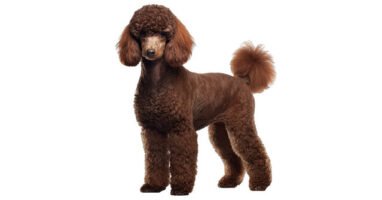
Five pounds of dog, ten pounds of personality. That is the Toy Poodle in one line. Under the sculpted curls sits a quick, theatrical little dog that wants to be in the middle of everything you do, all day, every day.
The unglamorous parts matter just as much: daily brushing, crowded teeth, and bones that are finer than most people expect. If you are weighing up the smallest poodle, here is what owning one actually involves.
Bred Down From a Retriever, Not Designed as an Accessory
All poodles descend from German water retrievers, and the Standard Poodle came first. Breeders spent generations selecting for smaller dogs, producing the Miniature and then the Toy, largely as companions for city dwellers and European nobility.
The downsizing changed the packaging, not the software. A Toy still carries the retriever’s brain: quick to learn, quick to get bored, and happiest with something to do, even if the job is just fetching a ball down the hallway.
Toy Poodle Size, Weight, and Coat
The Toy is the smallest of the three varieties. Adults stand 10 inches or under at the shoulder and typically weigh 4 to 6 pounds, about the weight of a small bag of sugar. Our guide to how big Toy Poodles get walks through the growth curve month by month.
The coat is dense, curly, and very low shedding, because loose hair gets caught in the curls instead of landing on your clothes. Colors run the full poodle range: black, white, cream, apricot, red, brown, silver, and more.
One honest caveat: low shedding is not the same as allergen free. No dog is truly hypoallergenic, and anyone with serious allergies should spend real time around the breed before committing.
Temperament: Clever, Devoted, and Slightly Dramatic
Toy Poodles bond hard. Most would happily spend the entire day within arm’s reach of their person, rotating between lap, couch, and the warm spot under the desk. Leave them out of the action and they will file a complaint, usually out loud.
They are also genuinely smart, consistently ranked near the top of canine intelligence lists. That shows up as fast learning and, occasionally, as a dog that has quietly trained its owner to produce treats on demand. Our deeper look at poodle temperament covers how the three varieties compare.
Sensitivity runs alongside the smarts. Toys read tone of voice and household mood closely, and harsh corrections tend to make them anxious rather than obedient.
A Typical Day With a Toy Poodle
Most Toy owners settle into a rhythm like this. A short walk and toilet break first thing, breakfast measured rather than poured, then a calm stretch while the household gets moving.
Midday brings a play session or a puzzle feeder and another short outing. Evenings are for the second walk, ten minutes of brushing on the couch, and the serious business of lap time.
None of it is heavy work. The total exercise need is roughly 30 to 45 minutes a day, split into short bursts. What a Toy cannot handle is a day with nothing in it at all.
Two small habits save a lot of trouble. Teach the dog to use a ramp or pet steps instead of launching off sofas, because those repeated hard landings are how small legs get injured. And keep floors clear of tiny swallowable hazards, since a four pound dog investigates the world at mouth level.
Grooming: The Real Cost of That Coat
Here is the commitment nobody can skip. The curly coat mats fast, especially behind the ears, under the collar, and in the armpits. A quick brush most days, worked down to the skin with a slicker brush and finished with a comb check, keeps it under control.
For the best tools for home brushing, see our best brushes for poodles.
Most owners also book a professional groom every 4 to 6 weeks for the bath, clip, nails, and ear clean. For a small dog in a simple pet clip, that commonly runs about $50 to $90 a visit depending on your area, which adds up to a real line in the yearly budget.
Budget for grooming before you budget for anything else. Skipping sessions does not save money. It ends in a shaved down dog, irritated skin, and a bigger bill at the vet.
Feeding a Very Small Dog
Toy Poodles run on small margins. A quality small breed food with real meat as the first ingredient covers the bases, and many owners split the day’s food into two or three small meals rather than one.
Measure everything. Half a pound of extra weight is a tenth of a five pound dog’s body, and it strains joints and shortens lives. Treats count toward the daily total, including the ones spent on training.
Training Notes: Tiny Bladder, Big Brain
House training is where Toy owners need patience. A four pound puppy has a very small bladder, so trips outside need to run on a strict schedule: after waking, after meals, after play, and last thing at night. Reward outdoor success the second it happens.
Crate training helps, provided the crate is introduced as a den, with meals and treats inside, and never used as punishment. The American Kennel Club’s training library is a solid reference for the fundamentals.
Socialization matters just as much. A Toy that meets different people, dogs, sounds, and surfaces early, in calm and positive doses, grows into a confident adult. A sheltered one can turn fearful and yappy, which is exactly where the breed’s noisy reputation comes from.
Health: Small Frame, Specific Watch List
Toys are a long lived variety, often reaching 12 to 15 years and sometimes more. Good breeding matters a great deal, because the variety carries known predispositions that responsible breeders screen for. The AVMA’s pet care resources are worth bookmarking for preventive care basics.
The watch list includes luxating patella, where the kneecap slips in and out of place, progressive retinal atrophy, an inherited eye condition, and Legg-Calve-Perthes disease, which affects the hip joint in small breeds. Ask any breeder for the parents’ health clearances and expect paperwork, not verbal promises.
Then there are the teeth. Forty two adult teeth packed into a very small jaw means crowding, and crowded teeth collect plaque fast.
Daily brushing with dog toothpaste and professional cleaning when your vet advises it are close to non negotiable in this variety. Much of what shapes a poodle’s lifespan applies to Toys just as much as to their bigger cousins.
Plan on at least one full checkup a year, and twice a year once a Toy reaches its senior years. Small dogs hide dental pain and early health trouble well, and routine blood work catches problems while they are still simple and affordable to manage.
Mistakes New Toy Owners Make
Carrying the dog everywhere tops the list. A Toy that is always in someone’s arms never learns to walk confidently on its own feet, and its muscles and manners both suffer.
Let it walk. It is a dog, not a handbag.
Skipping dental care runs a close second, followed by treating house training setbacks as stubbornness instead of a scheduling problem. Owners also underestimate the barking: Toys are alert and vocal, and teaching a quiet cue early beats shushing a practiced barker later.
Finally, rough handling. Toy bones are fine and genuinely fragile, so children need supervision and the dog needs a safe way down from furniture. Ramps and pet steps are cheap insurance against a fracture.
Who a Toy Poodle Suits
The Toy is close to ideal for apartment life: small, trainable to be reasonably quiet, and content with indoor play when the weather is foul. Someone home for much of the day is the real requirement, because this variety does not do well alone for long stretches.
They fit older children and adults who can handle a small dog gently, and they coexist happily with cats and other dogs when introduced properly. Households with toddlers who grab first and ask later should probably wait a few years.
The Poodle Club of America publishes breeder referral information and breed resources worth reading before you start shopping. Take your time with that homework. The right Toy, from the right breeder, is a fifteen year companion, not a purchase.
Frequently Asked Questions
How long do Toy Poodles live?
Typically 12 to 15 years, and plenty go beyond that. Healthy weight, dental care, and regular vet checkups are the habits that push a Toy toward the top of the range.
Are Toy Poodles good apartment dogs?
Yes, they are one of the best fits for apartment living, thanks to their size and modest exercise needs. They still need daily walks, play, and company, and their barking needs training so the neighbors stay friendly.
How much exercise does a Toy Poodle need?
Around 30 to 45 minutes a day for most adults, split between short walks and play. Mental exercise counts too: puzzle toys and short training games tire a Toy out in a way a slow stroll cannot.
Do Toy Poodles bark a lot?
They can. Toys are alert, quick to announce visitors, and prone to boredom barking when under exercised. Early training, enough activity, and not rewarding demand barking keep it at a manageable level.
Are Toy Poodles fragile?
Their bones are small and can fracture from falls or rough handling, so supervision with young children and safe ways down from furniture matter. They are not delicate in spirit, though. A sensibly managed Toy is a sturdy, active little dog.
How big do Toy Poodles get?
Adults stand 10 inches or under at the shoulder and typically weigh 4 to 6 pounds, about the weight of a small bag of sugar. Our guide to how big Toy Poodles get walks through the growth curve month by month. That small frame is also why ramps, gentle handling and careful portion control matter so much for this variety.
Are Toy Poodles hypoallergenic?
No. Toy Poodles are very low shedding because loose hair gets caught in their curly coat instead of falling on clothes and furniture, but low shedding is not the same as allergen free. No dog is truly hypoallergenic, and anyone with serious allergies should spend real time around the breed before committing.



9 Comments on “Toy Poodle: Size, Temperament, Care & Traits”