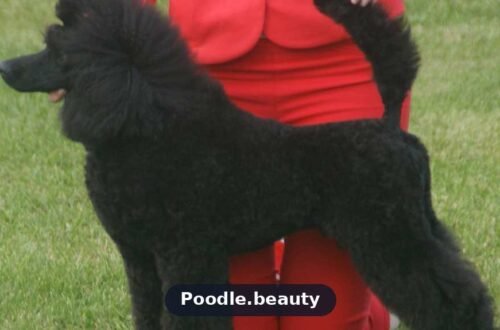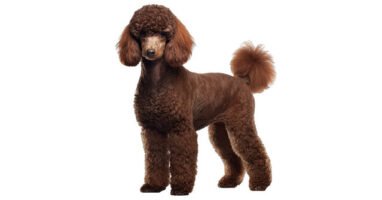
Poodles really are quick learners. In the most quoted ranking of dog intelligence ever published, they finished second, beaten only by the Border Collie.
But that ranking measured something much narrower than overall brainpower. It scored how fast a breed picks up new commands and how reliably it obeys, which is only one slice of what intelligence means in a dog.
The Famous Number Two Ranking, Explained
In 1994, psychologist Stanley Coren of the University of British Columbia published The Intelligence of Dogs. For the ranking, he surveyed more than 200 obedience trial judges in the United States and Canada and asked them to rate breeds on working and obedience intelligence.
The judges scored two things: how many repetitions a breed typically needs to understand a new command, and how often it obeys a known command the first time it is given. The top tier, where the poodle sits, generally learns a new command in fewer than five repetitions and obeys a first command at least 95 percent of the time, as Coren summarized for the American Psychological Association.
That is a real strength, and poodle owners see it daily. It is also a limited test, closer to school performance than to total intelligence.
Three Kinds of Intelligence, Three Different Scores
Coren himself divides dog intelligence into three types. Instinctive intelligence is what a breed was built to do, adaptive intelligence is how well a dog figures things out on its own, and working and obedience intelligence is the school learning his ranking measured.
Poodles score high in all three, but not in the same way. Their obedience scores are the documented ones, while their adaptive intelligence is the kind owners talk about most, because it is the kind that opens doors and rearranges the house.
Trainer Will Atherton covers that mix of brains and sensitivity in the breed overview below, including why the intelligence catches so many new owners off guard.
Under the Clip Is a Working Retriever
The poodle was developed in Germany as a water retriever, and the name comes from the German word pudelin, meaning to splash in water. The job demanded memory and judgement: watch where a bird falls, swim out, find it, and bring it back undamaged.
Work like that selects for dogs that read people closely. Retrievers took hand signals and whistles at a distance, and modern poodles still watch faces, hands and routines with unusual attention. Our poodle history guide traces how that working dog became the breed we know today.
The American Kennel Club calls poodles “eager, athletic, and wickedly smart,” and PetMD also places the poodle second on its smartest breeds list, noting the long history of working alongside people. That partnership, more than any party trick, is the root of the reputation.
What Living With a Quick Brain Actually Costs
A poodle learns your routine as fast as you teach it anything else. Feeding times, the sound of a particular cupboard, the difference between work shoes and walking shoes: all of it gets logged within days.
The same speed applies to habits you did not mean to teach. Barking that produces attention gets repeated, begging that once earned a scrap becomes a nightly performance, and a puppy who gets a laugh for stealing socks grows into an adult with a sock strategy.
Then there is boredom. A bored poodle will find its own job, and the job description usually involves your garden, your skirting boards or the contents of the laundry basket. That alert, busy side of the breed is covered in more depth in our guide to poodle temperament.
Does Size Change the Brain?
Toy, Miniature and Standard poodles are one breed, judged against the same standard and bred down in size rather than created separately. There is no solid research showing that one size learns faster than another.
What does differ is how people treat them. Small poodles are more likely to be carried past problems instead of trained through them, and owners often invest fewer training hours in a dog that can simply be picked up. Train a Toy with the same consistency you would give a Standard, and the gap most people imagine largely disappears.
There is also a lifestyle effect. A Toy who spends the day in laps and handbags meets fewer challenges than a Standard who hikes, swims and trains daily, and a brain that is used less looks duller than it is. The raw material is the same in all three sizes.
Clever Can Create Its Own Problems
Problem solving does not switch off when it becomes inconvenient. Poodles figure out lever door handles, baby gates and which fence board wobbles, and owners consistently report dogs who test a barrier again after it has been fixed once.
Counter surfing is engineering too: chair, then counter, then the chicken. Scolding the result rarely works for long, because the dog has learned the whole sequence, not just the reward at the end.
There is a softer side to watch as well. Poodles are people focused and sensitive, and that combination can tip into anxious behaviour, including separation related distress, when life is unpredictable or the dog is left alone too much. If the signs are intense, or your dog is hurting itself trying to escape, that is a conversation for your vet and not just a training plan.
Owners sometimes make this worse without meaning to. A clever dog who is rewarded with fuss and attention every time it panics learns that panic works, so calm, boring departures and returns matter more in this breed than in most.
Mental Exercise That Genuinely Tires a Poodle Out
Physical exercise alone rarely settles this breed. The goal is work for the nose and the decision making parts of the brain, in short sessions spread across the day.
- Sniff games: scatter part of dinner in the grass or hide treats around one room and send the dog to find them. Ten to fifteen minutes of searching tires most poodles more than the same time spent walking.
- Puzzle feeders: rotate two or three designs instead of buying one and using it forever, because a solved puzzle is memorized within a week or so.
- Trick training: five to ten minute sessions, two or three times a day. Poodles can build a working vocabulary of dozens of cues, and our poodle puppy training guide shows how to build the habit from the start.
- Dog sports: agility, dock diving, rally and retriever style games all suit the breed. Standards were built for the physical side too, as our poodle exercise guide explains.
As a rough budget, aim for 30 to 60 minutes of combined training, sniffing and play in chunks across the day for a Standard, and shorter daily sessions for Miniatures and Toys. Puppies and seniors need less at a time, but more often.
The Myth Check
Smart does not mean easy. A fast learning dog is easy to teach well and just as easy to teach badly, and many behaviour problems in poodles are simply lessons the dog learned faster than the owner noticed.
Smart does not mean self training either. Coren’s top breeds obey reliably because generations of handlers trained them consistently, not because the skills arrive pre-installed.
And the ranking itself has limits worth knowing. It is judges’ opinion rather than a laboratory test, it rewards biddability over independence or creativity, and it dates from 1994, when far fewer breeds were recognized. A beagle near the bottom of that list still has a nose no poodle can match.
Frequently Asked Questions
Are poodles the smartest dog breed?
They are second on Coren’s obedience and working intelligence ranking, behind the Border Collie. Whether that makes them the smartest depends on the kind of intelligence you mean, since the ranking never measured problem solving or instinct.
Are Toy poodles as smart as Standard poodles?
There is no good evidence of a difference. They are the same breed in a smaller body, and most differences owners notice come from how much training and socialization each dog happened to get.
How many words can a poodle learn?
Coren’s work suggests the average dog understands more than 150 words and signals, and the brightest learners manage far more. Poodles sit firmly in that quick learning group, so dozens of cues, toy names and routine words are a realistic goal with consistent training.
Why does my poodle ignore commands it clearly knows?
Usually because the payoff calculation changed. Smart dogs are excellent at learning which rules are enforced in which place, so a cue learned in the kitchen may not transfer to the park until it has been practiced there. Boredom and a more interesting distraction do the rest.
Do poodles get bored easily?
Yes, by dog standards they do. An under stimulated poodle typically invents entertainment, which can mean barking, digging, counter surfing or pestering you at your desk. Daily training games, sniffing work and varied walks prevent most of it.
Are poodles smarter than Labradors?
On Coren’s list, yes: the poodle ranked second and the Labrador Retriever seventh. Both are retrievers bred to work closely with people, both learn fast, and in a normal home the difference you would actually notice is small.