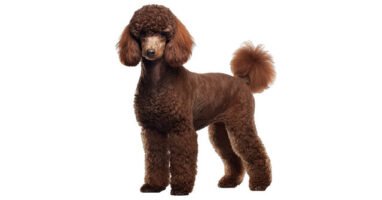
Two puppies on two different websites can look identical and be completely different dogs underneath. One was bred from health tested parents and raised underfoot in someone’s kitchen. The other came from a high volume operation that skips every step you cannot see in a photo.
This guide is the decision path between those two puppies. It is about choosing safely: where to look, which test results to demand, which sellers to walk away from, and what paperwork should be in your hand when you leave. Money gets only a brief mention, because our full poodle cost breakdown already covers the numbers in detail.
Step One: Breeder or Rescue? Decide That First
A good breeder gives you known parentage, documented health testing, early socialization, and a reasonable prediction of adult size and temperament. You also get a lifetime contact: responsible breeders take their dogs back at any age, no questions asked.
Rescue gives you something different. The fee is far lower, adult dogs arrive with their personality already visible, and you are giving a home to a dog who lost one.
Breed specific poodle rescues and general shelters both place purebred poodles and poodle mixes regularly. Puppies in rescue go fast, so most available rescues are adults.
Neither route is automatically the right one. What matters is that you choose deliberately instead of drifting toward whichever puppy photo you saw first. If you are still learning the breed itself, our complete poodle breed guide covers temperament, sizes, and coat care before you commit to either path.
One expectation to set straight now: poodles shed very little, but no dog is truly hypoallergenic. If allergies are driving your decision, spend time around adult poodles before you buy, not after.
For price context only: breeder puppies generally run $1,200 to $4,000 depending on size, and rescue fees are usually $150 to $600. Everything after that decision, the testing, the visit, the contract, is where quality is actually decided.
Step Two: Check the Health Testing, Condition by Condition
A reputable breeder tests breeding dogs before mating and can show you the results, on paper or as entries you can verify yourself in the OFA health database. “The parents are healthy” is not testing. A breeder who cannot show you test results has not done the testing.
Tests every poodle parent should have
- Eye examination (OFA CAER): an annual exam by a board certified veterinary ophthalmologist, registered with the Orthopedic Foundation for Animals. It screens for hereditary eye disease, including signs of progressive retinal atrophy.
- prcd-PRA DNA test: identifies carriers of the most common inherited cause of blindness in poodles. Two carrier parents can produce blind puppies, which is why both parents’ status matters.
- von Willebrand disease (vWD) DNA test: screens for the inherited bleeding disorder found in the breed. Affected dogs can bleed dangerously during surgery or injury.
- Hip evaluation (Miniatures and Standards): an OFA hip rating or a PennHIP score taken after the dog is old enough for the result to mean something.
- Patellar evaluation (Toys and Miniatures): an OFA patellar luxation exam confirming the kneecaps track normally, a common weak point in small poodles.
Extra testing to expect by size
- Standards: a skin punch biopsy for sebaceous adenitis, recorded in the OFA SA database; an OFA thyroid panel; a cardiac exam; and a DNA test for neonatal encephalopathy with seizures (NEWS).
- Miniatures: a DNA test for NEWS, and an OFA evaluation for Legg-Calve-Perthes disease, a hip joint condition of small breeds.
- Toys: an OFA evaluation for Legg-Calve-Perthes, alongside the patellar and eye testing above.
Testing reduces risk. It never eliminates it, and any breeder who guarantees a puppy will never have a health problem is telling you something untrue. Our overview of common poodle health problems explains what each of these conditions actually means for a dog’s life.
Red Flags: Walk Away From These
Puppy mills and outright scams share a pattern: they make buying easy and verification hard. If you meet several of the following, leave, no matter how cute the photos are.
- No health testing, or “vet checked” offered as though it were the same thing.
- You cannot visit, or the seller suggests meeting in a parking lot, or offers to ship a puppy you have never seen to you like a parcel.
- Puppies are always available, in several litters at once or in multiple breeds. That is a mill or a broker, not a breeder.
- Puppies are sold through pet stores, or through a polished website with a shopping cart and instant checkout.
- Payment is requested by gift card, wire transfer, or a cash app sent to a name that does not match the seller. This is the standard shape of online puppy scams built on stolen photos.
- No contract, no questions asked about your home, and puppies ready to leave before 8 weeks old.
- Pressure to decide today, often with a sudden discount.
The reverse signals are just as clear. Good breeders interview you, sometimes waitlist you, and are happy to lose a sale to the wrong home. The American Kennel Club publishes guidance on recognizing responsible breeders, and its marketplace listings still require the same checking described here, because a listing is not a guarantee.
On the Visit: What to Ask and What to Watch
Ask these out loud, and listen to how the answers come. A good breeder answers slowly and specifically, usually with paperwork in hand.
- Can I meet the mother, and the father if he is on site?
- Can I see the OFA records for both parents, or look them up while I am here?
- What are the puppies eating, and what handling and socialization have they had so far?
- What happens if I cannot keep this dog in five years? The answer you want is “the dog comes back to me.”
- When do puppies go home? Eight weeks is the floor, and many poodle breeders wait until 9 or 10 weeks.
Then watch. Puppies should be raised in the home, not in a shed or a row of cages. The space should smell like a house, not a kennel.
The mother should be relaxed around visitors, and the puppies should be curious rather than frantic or shut down. A puppy who hides from everything may simply be tired, but a whole litter that flinches from people is data.
The Paperwork You Should Leave With
When you collect a puppy from a responsible breeder, your folder should hold all of this:
- A signed contract with a written health guarantee, commonly one to two years against serious genetic conditions, and a clause requiring the dog’s return if you cannot keep it.
- Vaccination and deworming records with actual dates, products, and the vet clinic’s details.
- Copies of both parents’ health test results, or their registered names so you can verify the entries in the OFA database yourself.
- Registration papers, or a clear explanation of limited registration for a pet puppy.
- The microchip number and transfer instructions, if the puppy is already chipped.
- A few days of the food the puppy has been eating, so the first week does not start with an upset stomach.
If any item is missing, ask why before money changes hands. Vague answers at this stage become expensive answers later.
The First Week: A Short Prep List
Have the basics in place before pickup day: a crate, the same food the breeder uses, bowls, a light collar and leash, chew toys, an enzyme cleaner for accidents, and a vet appointment booked within 48 to 72 hours of coming home. That first visit verifies the records you were given and starts your own file.
Puppy proof at knee height: cords up, chemicals locked away, small swallowable objects gone. Then keep the first days quiet and routine based, with feeding, toilet trips, play, and sleep at predictable times.
And the enjoyable task: settle the name before the puppy has been called “puppy” for a week. Our list of poodle names for males and females has 235 options sorted by style, from dignified to ridiculous.
Frequently Asked Questions
Where do I find a reputable poodle breeder?
Start with the Poodle Club of America breeder referral, which lists breeders who follow the club’s code of ethics. Regional poodle clubs keep their own lists. Treat every listing, including marketplace ones, as a starting point for the checks in this guide rather than as an endorsement.
How can I verify a breeder’s health testing myself?
Ask for each parent dog’s registered name or OFA number, then search the public OFA database. Hips, eyes, patellas, thyroid, and sebaceous adenitis results are all recorded there. If a claimed result is not in the database and no certificate can be produced, assume it does not exist.
What age should a poodle puppy come home?
Eight weeks at the absolute minimum, and 9 to 10 weeks is common with careful breeders. Those extra weeks with the mother and littermates teach bite inhibition and basic dog manners that are hard to replace later. A seller pushing puppies out at 6 weeks is cutting corners you will pay for.
Is a rescue poodle a good choice for a first time owner?
Often, yes. An adult rescue’s size, energy, and temperament are already known, which removes the guesswork of a puppy. Breed specific rescues assess their dogs and match them to homes, and many offer foster to adopt arrangements so you can be sure before committing.
How much deposit is normal, and how should I pay it?
A deposit of $200 to $500 is typical once you are on a breeder’s list, and you should get a receipt or have it written into the contract. Never pay the full price up front to someone you have not visited, and never pay by gift card or wire transfer. Those two rules close the door on most puppy scams.





18 Comments on “Buying a Poodle Puppy: Complete Checklist for New Owners”