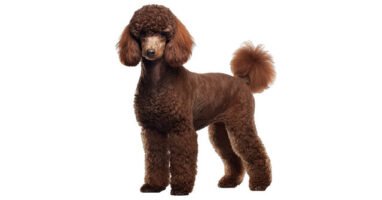
Every dog loses hair. Poodles just handle the evidence differently.
Live with a Labrador for a month and you will find hair on your clothes, your couch, and somehow inside a sealed sandwich. Live with a poodle and your floors stay oddly clean, while the dog itself quietly turns into a storage unit for its own dead hair.
That trade is the whole story of poodle shedding. The hair a poodle sheds mostly never leaves the coat, and understanding where it goes explains both the breed’s clean reputation and its non-negotiable grooming schedule.
How a Hair Cycle Normally Works
Every hair on every dog runs through the same four stages. In the growth stage (anagen), the follicle actively produces the hair. A short transition (catagen) follows, then a resting stage (telogen) where the hair sits in place doing nothing, and finally release (exogen), when the old hair falls out and the cycle starts again.
In most breeds, huge numbers of follicles move through these stages together, pushed along by daylight and temperature changes. That synchronisation is the spring and autumn coat blowout, when a double-coated dog can fill a bin bag with undercoat in a week.
Poodles break the pattern in two ways. Their growth stage runs unusually long, closer to how human hair behaves, and their follicles do not synchronise into seasonal mass releases.
Individual hairs let go here and there, all year, in small numbers. There is no blowout because there is no coordinated shedding event to blow out.
Where the Shed Hair Actually Goes
When a poodle hair detaches, it has a problem: it is surrounded by one of the densest, tightest-curled coats in the dog world. Instead of falling, it gets caught in the curls around it and stays there, woven into the living coat.
Left alone, layers of this trapped dead hair compress and felt together. That is a mat.
Mats pull on the skin with every movement, trap moisture against it, and hide irritation and sores underneath. Behind the ears, in the armpits, around the collar line and between the toes are where they form first, because friction does the felting.
So the honest answer to “where does the hair go” is: nowhere, until you remove it. Brushing is not cosmetic for this breed. Brushing is the scheduled emptying of everything the coat has collected, and the ASPCA’s grooming guidance makes the same point for long and curly coats generally.
Skip two weeks and you will feel the difference with your fingers. Skip two months and a groomer may have no humane option except clipping the whole coat off.
What Brushing and Clipping Actually Do
A slicker brush worked in small sections, down to the skin, pulls the trapped dead hair out before it felts. Following with a metal comb is the test: if the comb glides through to the skin, the section is clear; if it snags, there is dead hair still hiding in there. Ten to fifteen minutes every other day keeps most pet-length coats ahead of the problem.
Clipping changes the maths. A short clip leaves less coat for dead hair to hide in, stretches the interval between serious brush-outs, and makes bath day far quicker. Owners who keep a longer, sculpted coat pay for the look in daily brushing time.
Neither choice is wrong, but the coat length you pick must match the grooming time you honestly have. Our guide to grooming a poodle at home covers tools, brush technique, and realistic schedules by coat length.
Bathing fits into the same system. Every 3 to 4 weeks is typical, with a dog shampoo and a thorough rinse, since residue irritates skin and irritated skin sheds more. Dry the coat while brushing it out; wet curls left to air dry will mat as they tighten up.
Seasonal Shedding: What Changes and What Does Not
Owners sometimes swear their poodle sheds more in spring. What usually changes in spring is the routine, not the dog. Warmer weather means more outdoor time, more baths after muddy walks, and often a shorter clip, and each of those releases trapped hair that had been sitting in the coat for weeks.
The one genuine coat transition happens in adolescence. Puppies wear a soft, straighter coat that begins changing to the dense adult curl somewhere between 9 and 18 months.
During the changeover, dead puppy hair tangles in the incoming adult coat, mats form almost overnight, and many owners get their first real education in brushing. It settles once the adult coat is fully in.
Hormones can shift things modestly too. Pregnancy, spaying or neutering, and simple ageing may thin the coat or change its texture a little.
Gradual changes like these are normal life. Sudden ones are a different conversation, covered below.
The Shedding and Allergy Connection
Because shed hair carries skin flakes with it, a coat that holds onto its hair also holds onto most of its dander. That is the mechanical reason poodles are easier on sensitive noses, and it has limits: the dander is still on the dog, which is why regular brushing and bathing matter for allergy households rather than being optional extras.
No breed is completely allergen free, and poodles are no exception. The full picture, including how to test your own reaction and manage allergens at home, is in our guide to poodles and allergies. The AKC’s poodle breed profile also lists the coat among the breed’s defining traits for anyone comparing breeds.
When Shedding Stops Being Normal
A healthy poodle’s shedding is boring: a little hair in the brush, none on your trousers. When that changes, the coat is often the first place an internal problem shows itself. Watch for:
- Hair coming away in clumps, or visible thinning and bald patches
- Flaking, redness, greasy skin, or a sour smell from the coat
- Scratching, licking, or chewing at the skin alongside the hair loss
- A coat that turns dull and brittle despite decent food and grooming
Causes range from skin allergies and parasites to thyroid trouble and fungal infections, and none of them can be diagnosed from a photograph. The AVMA’s overview of hair loss in dogs runs through the usual suspects. Persistent changes deserve a vet visit, and our rundown of common poodle health problems covers the breed-specific conditions that can show up in the coat.
Diet sits underneath all of this. Skin and hair are built from what the dog eats, and a coat on poor nutrition turns dry and sheds its hairs early. Balanced food with adequate fatty acids supports the follicles properly; the options in our best dog food for poodles guide are a sensible place to compare.
Frequently Asked Questions
Do poodles shed at all?
Yes. Every dog’s hair completes a growth cycle and detaches eventually, poodles included. The difference is volume and destination: poodles release far fewer hairs, and most of those stay trapped in the curls instead of landing on your furniture.
Do poodles shed more in spring or autumn?
Not in the way double-coated breeds do. Poodles have no seasonal coat blowout because their follicles do not synchronise shedding with the seasons. If you notice more loose hair in spring, it is usually a shorter clip, more baths, or a grooming backlog releasing at once.
Why is my poodle matting so fast during the coat change?
Between roughly 9 and 18 months the soft puppy coat is replaced by denser adult curls, and the loose puppy hair tangles in the new growth. Daily brushing through this window is close to mandatory. Once the adult coat is fully established, the matting slows to a normal, manageable rate.
Does clipping a poodle short reduce shedding?
It reduces the visible problem rather than the shedding itself. The same number of hairs detach, but a short coat gives them less to tangle into and makes brush-outs quicker. Many owners find a shorter clip is the practical sweet spot for a pet poodle.
Are poodle mixes low-shedding too?
Sometimes, and it is a lottery. A doodle can inherit the poodle coat, the other parent’s shedding coat, or something in between, and siblings in one litter can differ. Never buy a mix on a non-shedding promise; assess the individual dog’s coat as an adult, or as close as you can get.
How much hair in the brush is normal?
A modest amount each session is healthy and expected; that is the trapped hair leaving on schedule. What is not normal is hair coming out in clumps, thin patches appearing, or the brush filling dramatically more than it did a month ago. Those changes warrant a vet visit.
So, Do Poodles Shed?
Yes, quietly, continuously, and mostly into their own coats. That single quirk explains the clean floors, the allergy-friendly reputation, and the grooming bill all at once.
The breed does not give you a hair-free home for nothing. It gives you a home where the hair waits politely on the dog until you deal with it.
Deal with it little and often and the system works beautifully. Ignore it and the coat collects its debt in mats. For a breed this smart and this long-lived, most owners decide the brushing is a fair price.



10 Comments on “Do Poodles Shed? Everything You Should Know”