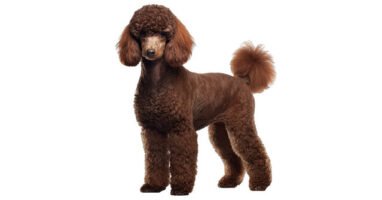
Here is the thing nobody selling chocolate poodle puppies puts in the advert: most brown poodles do not stay the deep chocolate color they were born with. A rich, dark brown puppy frequently matures into a soft cafe au lait, and some lighten further into silver beige by their second or third birthday.
Put together, the timeline in this guide runs like this. The first clue often comes at the first face trim, at six to eight weeks, when new growth comes in visibly lighter than the puppy coat around it. Clearing then runs over the first one to three years, with many browns reaching cafe au lait and some reaching silver beige by their second or third birthday. Parents who held their brown past age three are the best sign a puppy will keep its shade.
That is not a defect, and it is not something going wrong with your dog. It is normal poodle genetics doing exactly what poodle genetics do. But it does mean that if your heart is set on a dark chocolate adult, you need to shop with your eyes open.
This guide works through what brown really means in the breed, why the fading happens, how to read a puppy for clues about its adult shade, and what living with a brown coat actually involves.
The Fading Problem, Stated Plainly
Breeders call the process “clearing.” A puppy is born one shade, and over the first one to three years the coat gradually lightens to a different, paler shade. Owners often notice it first on the muzzle after the first face trim, where the new growth comes in visibly lighter than the puppy coat around it.
Brown is one of the most fade-prone colors in the breed. Some browns hold a respectable medium chocolate for life, and those dogs exist. But planning on it is a gamble, because the genes behind the clearing process cannot be judged from a cute eight-week-old face.
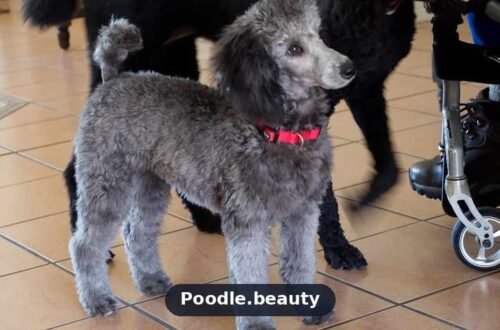
The black family does the same thing in its own way, with black puppies clearing to blue or silver. Our silver poodle guide covers that side of the family, and the underlying mechanism is closely related.
What “Brown” Means on Paper
The American Kennel Club recognizes eleven solid poodle colors, and three of them belong to the brown family: brown, cafe au lait, and silver beige. All three are registered colors, not faults, and all three can be shown. The full set is laid out in our poodle colors explained guide.
True brown is a clear, rich chocolate, ideally even from skin to tip. Cafe au lait is the warm, milky coffee shade, noticeably lighter, like coffee with a generous pour of milk in it. Silver beige is the palest of the three, a silvery beige with a cool sheen that can look almost grey in some lights.
Whatever the shade, every dog in the brown family shares the same points. The nose, eye rims, and lips are liver colored, never black, and the eyes are dark amber.
If a supposed brown puppy has a black nose, it is genetically something else. You can check the wording in the AKC poodle breed standard, which spells the points out clearly.
The Genetics, Without the Textbook
Coat color starts with a pigment called eumelanin, which comes in two versions: black and brown. A gene called TYRP1, known as the B locus, decides which version a dog makes.
In genetic shorthand, a brown poodle is b/b, two copies of the recessive b form, one from each parent. A dog with one copy, B/b, still looks black but carries brown, and a dog with B/B carries no brown at all. The UC Davis Veterinary Genetics Laboratory brown test page sets out all three results.
One copy of the dominant form is enough to produce black pigment, so brown is recessive. A poodle only turns out brown with two copies of the recessive form, one from each parent.
That single fact explains a lot of what confuses buyers. Two black parents can produce brown puppies if both quietly carry the recessive copy. And a brown parent bred to a black dog that does not carry brown will produce an entirely black litter.
The UC Davis Veterinary Genetics Laboratory has a clear explainer on how the brown gene modifies black pigment if you want the deeper version.
Fading is a separate layer on top of that. Poodles carry a progressive graying trait that gradually dilutes pigment in the hair as the dog matures, and its exact genetic basis is still not fully pinned down. In a brown dog, that graying is what walks a chocolate coat toward cafe au lait or silver beige over the first few years.
One widely used distinction is worth knowing. Cafe au lait dogs are often born a medium brown and clear modestly, while silver beige puppies are typically born a clear, dark brown and then lighten dramatically. It is a tendency breeders talk about, not a rule, and individual dogs break it.
Watching the colors side by side makes the clearing process easier to picture than any description:
Reading a Brown Puppy: Clues, Not Promises
No breeder can honestly guarantee a brown puppy’s adult shade. What you can do is stack the evidence. These are the checks experienced poodle people use, and every one of them is a hint, not a promise:
- Meet or see photos of both parents as adults. Parents who held their brown past age three are the single best sign a puppy might hold its color too. Photos of the parents as puppies prove nothing.
- Part the puppy’s coat and look at the roots. New growth coming in lighter at the skin than at the tips suggests clearing is already underway.
- Check between the paw pads. Pale or silvery hairs sprouting there are an early fade clue that breeders have used for generations.
- Look at the shaved face and feet. Many breeders do a first face trim at six to eight weeks. A muzzle that already looks a shade lighter than the body points toward significant fading.
- Ask about the grandparents. Color history two generations back tells you more than the puppy in front of you does.
The common mistake is falling for the darkest puppy in the litter and paying a premium for “deep chocolate.” The darkest eight-week-old is sometimes simply the one whose clearing has not started yet. Pay for health testing and a breeder who answers questions straight, not for a shade that may be gone by the dog’s second birthday.
Brown in Each Size
Brown appears in all three poodle varieties, because the color genetics do not care about height. Standards run over 15 inches at the shoulder and roughly 40 to 70 pounds, Miniatures stand 10 to 15 inches and weigh about 10 to 15 pounds, and Toys stay under 10 inches at 4 to 6 pounds.
In practice, Standards are the easiest brown to find, simply because more Standard breeders work with brown lines. Brown Toys and Miniatures are out there, but the smaller varieties have a smaller pool of dedicated brown breeders, so waiting lists are common and cafe au lait shades show up frequently in the smaller sizes.
Because brown is recessive, it is never the most common color in any size, though it is far from the breed’s rarest shade either. Our rundown of the rarest poodle colors puts brown’s scarcity in perspective.
Does Brown Change Temperament?
No. There is no credible evidence that coat color changes a poodle’s personality, energy level, or trainability. A brown poodle is a poodle: bright, athletic, people-focused, and fully capable of outsmarting an owner who is not paying attention.
The myths persist anyway. Browns get called calmer and gentler in some circles and clownish or stubborn in others, and reds get similar treatment, as our red poodle guide discusses. What actually shapes temperament is the breeding behind the dog, plus socialization and training in the first year.
Where the myths probably come from is breeder focus. A program that selects hard for color over several generations may pay less attention to temperament, and that shows up in the puppies. Judge the breeder’s priorities, not the coat.
Living With a Brown Coat
Day to day, a brown poodle needs exactly the same grooming schedule as any other color: brushing several times a week to keep the curly coat from matting, and a professional trim roughly every 4 to 6 weeks. The color-specific quirks are smaller, but real.
Sun bleaching is the big one. Brown coats pick up reddish, rusty tips after a summer of long sunny walks, and the effect is much more visible on brown than on black. The bleached hair grows out and trims away, so it is cosmetic rather than damage, but owners who love the rich tone tend to notice it.
Tear staining runs the other way. On cafe au lait and silver beige faces, reddish tear stains show up clearly against the pale coat, much as they do on white poodles. Daily face wiping and keeping the eye area trimmed short help, and persistent staining is worth a vet conversation, since it can flag blocked tear ducts or allergies.
One more practical point: poodles are low-shedding and often suit allergy-sensitive homes, but no dog is truly hypoallergenic. If allergies are the reason you are shopping, spend time with an adult poodle of any color before committing.
Health: The Same Poodle Risks
Brown poodles carry the same predispositions as the rest of the breed, because color genes and health genes are separate business. Depending on size, that list includes hip dysplasia in Standards, progressive retinal atrophy and other inherited eye conditions, patellar luxation in the smaller varieties, Addison’s disease, sebaceous adenitis, and gastric torsion (bloat) in deep-chested Standards.
You will occasionally see claims that brown lines are healthier or less healthy than others. Nothing solid backs that up. What the research and breed health surveys support is that testing matters: hips, eyes, and the available DNA panels tell you far more about a puppy’s future than its shade ever will.
So the health advice for a brown poodle is the advice for every poodle. Choose a breeder who shows you test results without being asked twice, keep the dog lean, and keep up with routine vet checks so that predispositions get caught early if they ever show up at all.
Frequently Asked Questions
Will my brown poodle stay chocolate?
Probably not at full puppy darkness. Many browns lighten at least somewhat, ending anywhere from a held medium brown to cafe au lait or silver beige. Parents who kept their color into adulthood are the best clue, but there is no guarantee.
What is the difference between cafe au lait and silver beige?
Cafe au lait is a warm, milky coffee brown. Silver beige is paler and cooler, with a silvery sheen over the beige. Both have liver noses and amber eyes, and both start life as brown puppies.
Are brown poodles rare?
Less common than black or white, because brown needs two copies of a recessive gene, but not genuinely rare. Brown Standards are reasonably easy to find from color-focused breeders. Brown Toys and Miniatures can involve a wait.
Do brown poodles cost more?
No, not on the colour alone. A fair price reflects health testing, raising standards and pedigree rather than shade, though some breeders do charge more where they market dark chocolate as a premium feature. Be cautious with any breeder whose prices jump sharply for colour alone.
Why is my brown poodle turning reddish at the tips?
That is usually sun bleaching, and it is cosmetic. Sunlight lightens the exposed ends of brown coats to a rusty tone over a season. It trims away at the next groom, although a coat that changes suddenly or in patches is worth showing your vet.
Does a brown poodle have different grooming needs?
Not in schedule or tools. Brushing several times a week and trims every 4 to 6 weeks apply to every color. The brown-specific extras are watching for sun bleaching in summer and keeping pale faces wiped so tear stains do not set in.