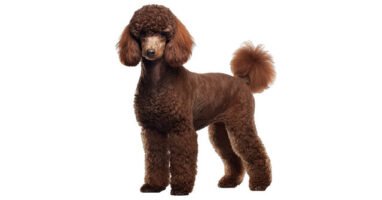
Ask experienced poodle people which size fits the widest range of lives and most of them land on the Miniature. At 10 to 15 pounds it is big enough for a muddy hike and small enough for a city flat, with the full poodle brain installed and switched on.
This guide runs through the whole picture: where the size came from, what the coat really demands, how much exercise is enough, the health watch list, and the honest running costs of keeping one well.
How the Miniature Poodle Came to Be
Poodles began in Germany as water retrievers, bred to plunge into cold lakes and bring back game. The big Standard was the original, and its famous clip was practical long before it was decorative: coat left over the chest and joints for warmth, the rest clipped short to cut drag in the water.
The Miniature was not created by crossing in some other small breed. Breeders selected the smallest Standards over many generations until the middle size bred true. France adopted the smaller dogs enthusiastically, their noses found work hunting truffles, and their trainability made them stars of traveling circuses across Europe.
That history explains the modern dog. A Miniature is a working retriever in a compact frame, which is why it still loves water, fetching, and learning complicated routines for an audience of one.
Size and Build: The Middle of the Range
Miniatures stand over 10 inches and up to 15 inches at the shoulder, and most weigh between 10 and 15 pounds. The build should look square and athletic rather than dainty. This is a sturdy dog that can keep up on a trail and hold its own in family rough and tumble.
Puppies grow quickly through the first six months, then level off toward adult size around the first birthday. The Miniature Poodle growth chart shows expected weights by age if you want to track a puppy against the norm.
Still torn between sizes? The side by side comparison of all three poodle sizes covers the practical differences in space, exercise, and cost.
Coat, Colors, and the Allergy Question
The coat is dense, curly, and grows continuously, in solid colors that include black, white, cream, apricot, red, brown, and silver. Parti colored dogs, wearing patches of two colors, exist and have devoted fans, though they sit outside the traditional show standard.
Because the curls trap loose hair instead of shedding it onto your floors, Miniatures are often marketed as hypoallergenic. The honest version is that no dog is completely allergen free. Many allergy sufferers do noticeably better around a poodle, but spending proper time with the breed beats a hopeful guess every time.
Temperament: Bright, Tuned In, and Busy
Miniatures are clever in a way that shapes daily life. They learn the household routine fast, work out which cupboard holds the treats, and notice immediately when anything changes. Underestimate that brain and it will find its own projects.
They are also a sensitive variety. Owners consistently describe a dog that shadows them from room to room and checks in when someone is upset. Calm, consistent handling brings out the best in them, while a loud and chaotic household can make a Miniature anxious.
With other pets they generally do well. Introductions should still be slow and supervised, but most Miniatures live happily alongside dogs and cats, and their prey drive is mild for a sporting breed.
A squirrel may get chased. It rarely becomes an obsession.
Expect a capable little watchdog as part of the package. Miniatures notice visitors, delivery drivers, and suspicious leaves with equal dedication, so most owners teach a settle cue early and reward the quiet that follows the first alert.
The Sportiest Poodle, Pound for Pound
Here is the Miniature’s party trick: of the three sizes, this is often the keenest athlete relative to its size. Miniatures excel at agility, where their speed, bounce, and love of learning sequences make them regulars in the smaller height classes.
They also take naturally to obedience, rally, trick training, and scent games. Owners who want a genuine dog sport partner without a large dog’s food bill and grooming bill often end up here, and rarely regret it.
Exercise: About an Hour, Plus Brain Work
Plan on roughly an hour of activity a day for an adult Miniature: brisk walks, some fetch or free running, and active play. Our breakdown of poodle exercise needs goes size by size if you want the finer detail.
Physical exercise alone is not the whole job. Ten minutes of training, a puzzle feeder, or a game of hide and seek with toys tires a Miniature in a way another lap of the block cannot.
A bored Miniature does not rest. It redecorates.
A realistic day might be a 30 minute morning walk, a short training session or puzzle toy at midday, and 20 minutes of play or a second walk in the evening. Puppies and seniors need less, split into gentler pieces.
Grooming: Tools, Routine, and Clips
The coat is the biggest ongoing commitment of Miniature ownership, and there is no way around it. Brush several times a week with a slicker brush, then follow through with a steel comb to catch mats forming at the skin. The ASPCA’s grooming guidance covers the technique basics well.
A home kit is short: slicker brush, steel comb, nail clippers or a grinder, dog shampoo, and styptic powder for the occasional nicked nail. Professional grooming every 4 to 6 weeks handles the clip, bath, ears, and nails, and for a Miniature in a pet clip, expect roughly $60 to $100 a visit in many areas.
Clip choice is mostly lifestyle. A short puppy or sporting clip keeps brushing easy and suits active dogs, while longer styles look glamorous and demand near daily work. Mats are the enemy at any length: they pull on the skin, trap moisture, and can hide irritation underneath.
While you are brushing, give the ears a weekly check. Poodle ears grow hair in the canal and hang close, which traps warmth and moisture. Redness, a yeasty smell, or head shaking between grooms is a vet conversation, not a wait and see.
Training and the Alone Time Problem
Training a Miniature is usually the fun part of ownership. They want to learn, they pick up cues within a handful of repetitions, and reward based training keeps the whole thing a game. Keep sessions short, end on a win, and skip harsh corrections entirely, because this breed shuts down under pressure.
Socialization starts the day the puppy comes home: new people, surfaces, sounds, and calm vaccinated dogs, all in positive doses. The AVMA’s socialization advice explains why those early weeks carry so much weight.
The genuine weak spot is separation. Miniatures bond intensely and can struggle with long absences, so practice short departures early, keep hellos and goodbyes boring, and leave a tired dog with something constructive to do. Persistent distress is worth a conversation with your vet or a certified behaviorist.
Feeding and Weight
Feed a quality food built for small, active dogs, with real meat named first on the label. Most adults do well on two measured meals a day, which steadies energy and makes house routines easier to hold.
Weight is the number to watch. A single extra pound on a twelve pound dog is proportionally like eight or nine pounds on a person, and it loads the knees and shortens the active years. You should be able to feel ribs under a thin layer of fat without hunting for them.
Keep training treats tiny and count them as part of the day’s food, not extras on top of it. A pea sized reward delivered often teaches just as fast as a biscuit, and it does not quietly undo the measuring you did at the bowl.
Health Watch List and Lifespan
Miniatures are a hardy variety and commonly live 13 to 15 years, with plenty reaching beyond that. Like every purebred, they carry predispositions rather than guarantees, and good breeders screen their breeding dogs for the known ones.
The name that comes up most often is luxating patella, a kneecap that slips out of its groove and can cause a skipping gait. VCA Hospitals explains the condition and its severity grades clearly. Keeping a Miniature lean is the simplest protection within your control.
Dental disease is the other regular visitor, because small jaws crowd teeth and plaque builds quickly. Daily brushing with dog toothpaste, never human toothpaste, plus professional cleaning when your vet advises it, keeps mouths comfortable. Our overview of poodle health problems by size shows how the watch list shifts across Toy, Miniature, and Standard.
Build the vet relationship before you need it. An annual checkup, twice a year for seniors, catches the slow problems, heart, kidneys, teeth, while they are still cheap and simple to manage.
What a Miniature Actually Costs to Keep
Puppies from reputable breeders commonly run from about $1,500 to $3,000, sometimes more for show potential. Rescue and rehoming routes cost far less and are worth checking first if you are flexible about age.
The yearly picture matters more than the purchase. Food for a small dog is modest, but grooming every 4 to 6 weeks, routine vet care, and the occasional unexpected bill add up steadily.
The purchase price is the cheap part of owning a poodle. The coat alone will outspend it within a few years.
Common Mistakes With Miniatures
Underestimating the brain is mistake one. Owners exercise the legs, skip the thinking work, then wonder why the dog barks at the window all afternoon. Mistake two is letting grooming slide for a month and presenting the groomer with a felted coat that has to come off short.
The third is skipping socialization because the puppy seems confident at home. Miniatures can turn watchful and vocal with strangers if the outside world never got a proper introduction during those early months.
Is a Miniature Poodle Right for You?
If you want a dog that fits an apartment but refuses to act like a stuffed toy, the Miniature is the sweet spot of the breed. It suits active singles, couples, and families with children old enough to handle a smallish dog thoughtfully.
The deal breakers are time and grooming. A dog left alone ten hours a day will be miserable, and an owner who hates brushing will end up paying for shave downs. Everyone else tends to wonder why they waited so long.
Frequently Asked Questions
Are Miniature Poodles good apartment dogs?
Yes, they are excellent apartment dogs for owners who keep a routine. They still need daily outings, play, and training, because a Miniature without structure develops strong opinions about how the household should run.
How much exercise does a Miniature Poodle need?
Around an hour a day for a healthy adult, mixing walks, play, and free running. Add short training games on top, because mental work tires this variety as much as physical work does.
Do Miniature Poodles bark a lot?
They are alert and will announce visitors and strange noises, so they can be vocal. Most of it is manageable with early training, clear boundaries, and enough exercise to take the edge off.
How often does a Miniature Poodle need grooming?
Brush several times a week to stop mats forming at the skin, and book a professional groom every 4 to 6 weeks. Skipping either one leads to a matted coat that usually has to be clipped off short.
How long do Miniature Poodles live?
Usually 13 to 15 years, and many live longer. Good breeding, a lean body weight, dental care, and regular vet visits are what carry a Miniature to the upper end of that range.




10 Comments on “Miniature Poodle: Complete Breed Guide for New and Future Owners”