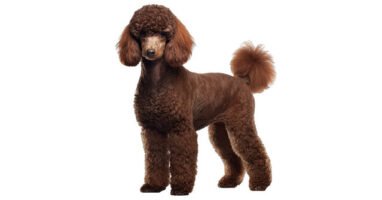
Here is the thing nobody tells you at the breeder’s home: the silver poodle puppy you fall for will look black. Not dark gray, not smoky. Black.
The luminous silver coat everyone admires arrives slowly over the first two years of the dog’s life, and watching it happen is half the fun of owning one.
Silver is a true, recognized poodle color, not a defect or a mix. This guide explains the clearing process phase by phase, the gene behind it, and how silver differs from its two closest relatives, blue and silver beige.
Born Black: The Clearing Timeline
Clearing is the word breeders use for the gradual lightening, and it follows a fairly predictable schedule. Individual dogs run a little fast or slow, but the sequence rarely changes.
Birth to six weeks
Puppies are born black or very dark charcoal. The earliest clue hides between the toes: silvers often show pale or silver hairs in the webbing of the paws weeks before anywhere else changes. Experienced breeders check there first.
Six weeks to six months
The face gives it away next. When the puppy’s face is clipped for the first time, the new growth at the roots comes in silver, so the muzzle suddenly looks several shades lighter than the ears. The feet often clear early too.
Six months to two years
Now the body follows. The coat lightens from the roots outward, so a freshly clipped dog looks dramatically lighter than the same dog carrying six weeks of growth. Owners often see banded hairs during this phase, dark at the tip and silver at the base.
Two to three years
By about age two, most silvers have reached their finished shade, with stragglers completing by three. What remains is an even, cool gray with a metallic sheen that reads as gunmetal indoors and near platinum in bright sun.
For contrast, a true black poodle holds its depth for life, graying only slightly with age. Silver breeders start from that same black base, which is why the two colors are so often confused in puppyhood.
Why It Happens: The Fading Gene
Silver is black with a progressive graying gene laid over it. The gene does not remove color all at once; it lightens each new hair as it grows, which is why the transformation takes years rather than weeks.
The gene works by dosage: a dog needs two copies to clear all the way to silver. One copy produces the darker color called blue. This is also why two black parents can produce silver puppies when both quietly carry the gene.
There is currently no simple DNA test that identifies the silvering gene. Breeders predict it from pedigrees, from the paw webbing clue, and from what previous litters have done. That uncertainty is part of why silver litters are planned so carefully.
Silver vs Blue vs Silver Beige
These three get confused constantly, sometimes by the people selling the puppies. Here is the clean way to separate them.
- Silver: born black, clears to a light, bright metallic gray by age two or three.
- Blue: born black, clears only partway, settling into a dark slate or charcoal that can pass for black in poor light.
- Silver beige: born brown, clears to a pale milky café shade, the brown based equivalent of silver.
“Gray” itself is not an official poodle color name. Owners use it loosely for any of the three, which is why a dog advertised as gray could turn out to be any of them.
If the final shade matters to you, ask what the puppy was born as and what the parents cleared to. Our poodle colors explained guide covers the whole family of clearing colors, and the phantom poodle guide shows a completely different way a coat can wear two tones.
Temperament: Color Is Only Color
A silver poodle is a poodle. Color has no bearing on temperament, intelligence, or trainability, and anyone who tells you silvers are calmer, sharper, or anything else is selling you a story.
Expect the standard package: bright, athletic, and tuned in to their people to an almost unsettling degree. Silvers thrive on training, games, and being included, and they go flat and bored in households that wanted a decorative dog.
They suit owners who want a participant, not an ornament. Daily exercise, something to learn, and company through the day matter far more than the shade of the coat.
Exercise needs follow size, as with every poodle. Toy silvers manage with 30 to 45 minutes a day, Miniatures want closer to an hour, and Standards need 60 to 90 minutes split across the day, with training or games folded in so the brain works as hard as the legs.
Grooming a Silver Coat
The grooming schedule is the standard poodle one: brush several times a week down to the skin, bathe when needed, and clip every four to six weeks. Silver adds two cosmetic quirks to that routine.
First, the light coat shows everything. Mud, grass stains, and tear marks that vanish on a black dog announce themselves on a silver, so many owners use a gentle brightening shampoo made for dogs and wipe the eyes daily. Human shampoo is too harsh for canine skin, whatever the label promises.
Second, length changes the color you see. A fresh, shorter clip shows silver at its brightest, because you are looking at the newest, lightest growth.
Let the coat grow out and the older, darker tips dominate, so the dog appears to darken between grooms. It is the same dog; only the hair length changed.
Tear staining deserves a mention of its own. The reddish marks under the eyes show starkly on a cleared silver face, so wipe the eye area daily with a damp cloth and keep the face trimmed short. Persistent staining is worth a vet visit, since blocked tear ducts and ear trouble are common causes.
Health and the Dilute Myth
Silver poodles share the breed’s general health picture: predispositions to hip dysplasia, inherited eye disorders such as progressive retinal atrophy, Addison’s disease, epilepsy, and bloat in Standards. These are breed tendencies, not certainties, and they apply to poodles of every color.
You may read that dilute colors come with weak skin or poor health. In some breeds that concern has a basis, but in poodles there is no solid evidence that silver dogs are any less healthy than black ones. What predicts a puppy’s health is the breeder’s testing program, not the shade of the coat.
PetMD has vet reviewed background on the main poodle conditions if you want the detail. Then keep up the ordinary defenses: annual exams, vaccinations, parasite prevention, and dental care.
Cost and Finding a Silver Puppy
Silvers are uncommon rather than truly rare, and prices usually sit at a premium over black puppies from comparable breeders. The gap reflects the smaller pool of silver producing parents and steady demand for the color.
The purchase price is the small part. Budget for professional grooming every four to six weeks, quality food, and vet care across a lifespan that commonly runs 12 to 15 years and beyond. A cheap puppy from an untested line is the most expensive option in the long run.
Choose the breeder who leads with health results and temperament, and treats color as the bonus it is. If unusual shades are your thing generally, our roundup of the rarest poodle colors is a good browse. The AKC breed page and the Poodle Club of America round out the homework.
One more cost of the color is patience. Because breeders cannot test for the gene, even a planned silver litter is a probability rather than a promise, and waiting lists for silvers from good breeders are normal. A breeder who guarantees a finished shade from a newborn litter is guessing at your expense.
Frequently Asked Questions
Are silver poodles born silver?
No. They are born black or very dark charcoal and clear gradually. The first signs are pale hairs between the toes and silver roots on the clipped face, usually within the first six months.
How long does clearing take?
Most silvers finish by about two years of age, and nearly all by three. The face and feet lead, the body follows, and the color lightens from the roots outward the whole way through.
How can I tell if a black puppy will turn silver?
Check between the paw pads for silver hairs and look at the roots after the first face clip. A breeder who knows the lines can often predict from the pedigree too. There is no DNA test for the silvering gene yet.
What is the difference between silver and blue?
Both start black. Silver clears to a light metallic gray, while blue clears only to a dark slate. In dim light a blue can pass for black; a finished silver never can.
Do silver poodles cost more?
Usually a little, yes. Recessive genetics and steady demand keep prices above black puppies from similar breeders. Health testing should always matter more to you than the premium for color.
Are silver poodles hypoallergenic?
No dog is truly hypoallergenic. Poodles shed very little, which many allergy sufferers tolerate better than heavy shedding breeds, but dander is still produced. Spend time around poodles before committing, and talk it through with your allergist.