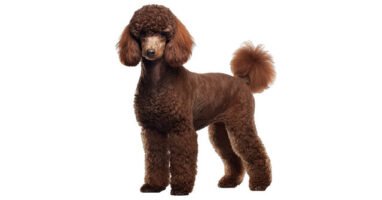
Ask a room of black poodle owners why they picked the color and most will point at the coat. A solid black poodle in good condition looks almost sculpted, with tight curls catching the light and a silhouette that reads as pure confidence.
Now the honest part, before anything else. Black is only a color. It does not make a poodle calmer, smarter, healthier, or easier to train than a poodle of any other shade, and a seller who charges more based on temperament claims tied to color is selling a story, not a dog.
What black genuinely changes is coat care. Dark coats fade in specific ways, show dullness and flaking faster, and raise questions at puppy-choosing time that lighter colors never do. This guide covers how to tell a true black from a blue in disguise, why the tips turn rusty, and how to keep the coat deep, dark, and glossy.
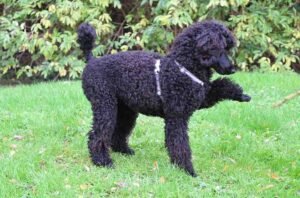
True Black, Blue, or Simply a Fading Coat?
A true black poodle is black all the way down. Part the coat anywhere on the body and the hair at the root matches the hair at the tip. The skin pigment agrees: nose, lips, eye rims, and paw pads should all be black.
Many puppies that look black at eight weeks are not black at all. Blues are born black and clear slowly, shifting toward a charcoal or slate tone by roughly two years of age.
Silvers clear much faster, and a freshly clipped silver puppy often shows a noticeably pale face within the first couple of months. Our guide to silver poodles explains that clearing process in detail.
Breeders also use the term “bad black” for a dog that is genetically black but fades unevenly into a rusty, grizzled brown-grey as it ages. That patchy fade is written into the genes. No shampoo, diet, or grooming routine can rewrite it, which is why the parents’ coats matter so much when you choose a puppy.
If the whole color picture interests you, poodle colors explained walks through how each shade develops and which ones hold for life.
Why Black Coats Turn Rusty at the Tips
The most common complaint from black poodle owners is not true fading at all. It is sun bleaching.
Ultraviolet light breaks down dark pigment, and the oldest hair suffers first. Those oldest hairs sit at the tips, so a dog that spends summer days outdoors often ends the season with distinctly reddish ends.
Dryness makes it worse. Dead, weathered coat left sitting in the curls looks brown and dusty, and it drags down the whole color. Chlorine from pools, salt water, and harsh shampoos strip the coat further and speed the process along.
Rusty tips are usually a sunlight and coat condition issue, not a sign that your black poodle is changing color. Clip off the damaged ends, restore moisture, and the coat underneath is almost always still properly black.
Keeping a Black Coat Deep and Glossy
Shine on a black coat is mostly about hair condition. Healthy, hydrated, dead-coat-free hair reflects light evenly. Neglected hair scatters it and reads as dull grey-brown, even on a genetically perfect black dog.
A routine that works for most owners looks like this:
- Brush and comb several times a week, finishing with a metal comb that reaches the skin. This removes the dead hair that dulls the surface.
- Bathe every 3 to 4 weeks with a gentle, moisturizing dog shampoo, and always use conditioner. Rinse longer than feels necessary, because residue kills shine.
- Book a professional clip every 4 to 6 weeks. Regular trims remove sun-damaged ends before the whole coat starts looking tired.
- Rinse the coat with plain water after swimming, then dry it properly rather than leaving pool or sea water in the curls.
- Feed a quality diet with adequate protein and omega fatty acids, which support the skin and coat from the inside.
Our step-by-step guide to grooming a poodle at home covers the brushing and bathing technique behind this routine. One honest note for allergy households: the poodle coat sheds very little, which many sensitive owners find easier to live with, but no dog is truly hypoallergenic.
Photographing a Black Poodle Without Losing the Dog
Every black poodle owner knows the frustration of a photo that shows a cheerful black blob with eyes. Cameras meter for average brightness, and a dark coat tricks them into underexposing the very details you want to see.
A few habits fix most of it. Shoot in open shade or on an overcast day, when light is soft and even. Avoid harsh midday sun, which blows out the highlights on the top of the coat while the face stays in shadow.
On a phone, tap the screen on the dog’s face so the camera exposes for the dog instead of the background.
Background contrast helps more than any filter. A black poodle against pale grass, a light wall, or a bright beach gives the camera edges to work with. Get down at the dog’s level, skip the direct flash, and you will finally capture the expression everyone else sees in person.
The Dog Underneath: Temperament and Sizes
Everything in this section describes poodles generally, because color plays no part in it. Poodles are bright, people-focused dogs that bond closely with their households. They read moods well, learn routines fast, and notice immediately when the routine changes.
That intelligence needs a job. Puzzle feeders, scent games, trick training, and regular obedience work keep a poodle’s brain occupied. Skip the mental exercise and the dog will invent some, usually involving the trash can, the laundry basket, or a personal vendetta against your favorite shoes.
Size changes the logistics, not the personality. Per the American Kennel Club, Standards stand over 15 inches at the shoulder and weigh roughly 40 to 70 pounds, so they need real space and around an hour of proper exercise a day. Miniatures stand 10 to 15 inches and weigh about 10 to 15 pounds.
Toys stand under 10 inches and weigh roughly 4 to 9 pounds, so they need gentler handling. Sharp and opinionated, though, they are every bit a match for the big dogs.
Health: A Breed Watch List, Not a Color One
Black poodles share the breed’s predispositions, nothing more exotic than that. These are risks to watch for and discuss with your vet, not certainties that come with the coat. The main ones breeders screen for include:
- Hip dysplasia, mainly a concern in Standards
- Progressive retinal atrophy (PRA), a group of inherited eye diseases
- Sebaceous adenitis, an inflammatory skin condition
- Addison’s disease, a disorder of the adrenal glands
- Bloat (GDV), a life-threatening stomach emergency in deep-chested Standards
- Epilepsy
The Poodle Club of America health section details the tests recommended for each variety. Ask any breeder for those results in writing. Regular vet check-ups, sensible weight, and appropriate exercise do the rest of the work across a lifespan that commonly runs 10 to 14 years for Standards and up to 16 for the smaller varieties.
Choosing a Black Puppy Without the Guesswork
Because a black puppy can turn out to be a blue, a silver, or a bad black, the parents are your best evidence. A sire and dam who are still deep, even black at three or four years old are a far better sign than two glamorous one-year-olds who have not finished clearing yet.
Ask the breeder directly whether there is fading anywhere in the lines, and expect a straight answer either way. Meet the mother, check the puppies’ pigment on nose and pads, and confirm the health testing before money changes hands. Our buying a poodle puppy checklist walks through the full process, and the ASPCA publishes sound guidance on breeder and adoption red flags.
Rescue is worth a look too. Black dogs of every breed wait longer in shelters than lighter ones, for reasons nobody can defend, and breed rescues regularly place lovely black poodles of all sizes.
Frequently Asked Questions
Do black poodles fade as they get older?
A genetic true black holds its color for life, aside from some greying around the muzzle in old age. Dogs that fade substantially were almost always blue or silver underneath, or carry the uneven fading pattern breeders call bad black. Sun-bleached tips can look like fading but disappear once the damaged ends are clipped off.
What is the difference between a black poodle and a blue poodle?
Blues are born looking black and clear gradually to a dark charcoal or slate shade, usually by about two years old. True blacks stay black at the root and tip for life. At eight weeks old the two can look identical, which is why the parents’ adult coats tell you more than the puppy in front of you.
Are black poodles rare?
No. Black is one of the breed’s original and most common colors, well established in all three sizes. If a seller markets a solid black puppy as rare and prices it accordingly, that is a sales pitch rather than a fact.
Do black poodles get hotter in the sun than lighter poodles?
Dark coats do absorb more sunlight, and owners consistently report that black dogs seek shade sooner on hot days. Walk in the morning or evening during summer, keep water available, and watch for heavy panting. The coat itself still insulates the skin, so shaving a poodle bald is not the answer to heat.
Is a black poodle’s temperament different from other colors?
No. Temperament comes from breeding, early socialization, training, and daily life, never from pigment. A black poodle from a thoughtful breeder, raised well, will be the same bright and loyal companion as any littermate in another color.
Why does my black poodle look brown in sunlight?
That is bleaching on the oldest, outermost hair, often combined with dry or dead coat sitting in the curls. A bath, a thorough brush-out, and a trim that removes the damaged ends will usually restore the true color. If the roots themselves are light, the dog is likely a blue rather than a bleached black.
A black poodle asks for the same things every poodle asks for: grooming you actually keep up with, training that engages a busy brain, exercise, and company. In return you get one of the sharpest and most devoted companions in the dog world, wrapped in the most striking coat the breed produces. For most owners, that trade settles itself quickly.




7 Comments on “Black Poodle Guide: Personality, Health & Care”