
Plenty of dog lovers spend years assuming a dog is off the table because a visit to a friend’s house left them sneezing for hours. Then someone mentions poodles, and the word “hypoallergenic” gets attached within seconds. That word does a lot of heavy lifting in dog marketing, and it deserves a closer look before anyone falls for a puppy.
Here is the honest version. Poodles sit near the top of every list of breeds that allergy sufferers tolerate best, and there are solid biological reasons for that. But no dog on earth is completely allergen free, and anyone who promises you one is selling something.
What Actually Triggers a Dog Allergy
Most people blame the fur. Fur is mostly innocent. The reaction comes from proteins a dog produces in its skin flakes, saliva, and urine, and those proteins are what your immune system mistakes for a threat.
The best studied of them is called Can f 1. It is produced in the skin’s oil glands and in saliva, and dogs spread it constantly by licking their coats, shedding skin cells, and shaking after a nap. Once those particles dry out, they become light enough to float, settle into carpets and upholstery, and stay active for months.
That persistence is why a house can bother a sensitive visitor long after the dog has left the room. It is also why the amount of loose hair a breed drops matters so much.
Hair is the delivery vehicle. The more hair and skin flakes a dog scatters around the home, the more allergen ends up in the air and in the furniture.
What “Hypoallergenic” Honestly Means
The prefix “hypo” means below or less. Hypoallergenic means less likely to provoke a reaction. It has never meant incapable of provoking one, and it is not a regulated term with a test a breed can pass.
Every dog produces Can f 1 and the related proteins, poodles included. Studies comparing allergen levels in homes with so-called hypoallergenic breeds and homes with ordinary breeds have found the gap is far smaller than the marketing suggests, because allergen comes from skin and saliva, not just from hair on the floor.
So the realistic claim for poodles is narrower, and still valuable. A poodle’s allergens largely stay on the dog instead of spreading through the home.
For a person with mild to moderate sensitivity, that difference can be the difference between miserable and manageable. For someone with severe allergies or asthma, it may not be enough, which is why testing with the actual dog matters more than any breed label.
Why Poodles Spread Fewer Allergens
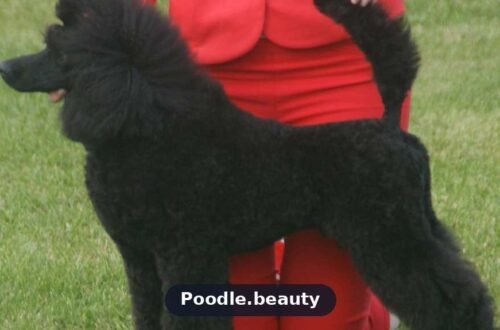
The poodle coat is a single layer of dense, tight curls that grows continuously rather than cycling off in seasonal waves. When a hair finishes its life, the surrounding curls tend to catch and hold it instead of letting it drift onto the sofa. Skin flakes get caught the same way.
The result is a dog that carries its allergens around on its own body, where regular grooming can remove them in a controlled place, rather than distributing them across every room. VCA Hospitals notes the poodle among the breeds commonly recommended for people with allergies, largely thanks to this low-shedding coat. Our guide on how much poodles actually shed explains the coat mechanics in detail.
Size plays a minor role. A Toy poodle has less skin surface than a Standard, so it produces less total dander, but the allergen concentration is identical. A well-groomed Standard will often be easier to live with than a neglected Toy, because coat care, not size, does the real work.
Your Allergen Management Checklist
Breed choice is maybe a third of the equation. The households that succeed treat allergy control as a weekly routine, not a one-time decision. This is the routine that comes up again and again from owners who make it work:
- Brush the coat several times a week, ideally outdoors or in one easy-to-clean spot, so trapped hair and dander leave the house instead of relocating to it.
- Book a full groom, bath included, every 4 to 6 weeks. If you are the allergic one, let someone else handle brushing and bathing where possible, or wear a mask while you do it.
- Bathe at home between grooms with a gentle, dog-specific shampoo when your vet agrees. Overbathing dries the skin, dry skin flakes more, and flakes are the problem.
- Vacuum soft surfaces with a HEPA filter vacuum at least twice a week, and run a HEPA air purifier in the bedroom.
- Wash the dog’s bedding weekly and your own bedding in hot water on the same cycle.
- Keep the bedroom a dog-free zone. Eight low-allergen hours a night is the single change many sufferers rate highest.
- Choose hard floors over wall-to-wall carpet where you can, and wash your hands after proper cuddle sessions before touching your face.
Grooming technique matters inside that routine. Brushing down to the skin with a slicker brush, then checking your work with a comb, is what actually clears the trapped dander out. Our step-by-step guide to grooming a poodle at home walks through the tools and the order to use them in.
Food supports the system quietly. A dog on a balanced diet with healthy skin produces less flaky dander than a dog whose skin is dry and irritated, and omega fatty acids are often part of that picture. The picks in our best dog food for poodles guide were chosen with skin and coat condition in mind.
Test the Reality Before You Commit
Allergy responses are individual, sometimes bafflingly so. One person reacts to a breed in minutes; another with the same test results lives with that breed comfortably for years.
Written guarantees are worthless here. Time with the dog is the only reliable test.
Visit the breeder or rescue more than once, handle the dog, let it lick your hands, and rub your face in its coat if you are brave. Then wait.
Reactions can build over hours, so a cheerful ten minutes proves very little. Fostering or a trial period, where the setup allows it, is even better evidence.
Before any of that, an allergist can tell you what you are actually reacting to and how strong the reaction is. Some people discover their problem is dust mites rather than dogs at all.
For confirmed dog allergies, options run from antihistamines and nasal sprays to immunotherapy for people who need a longer-term fix. The Asthma and Allergy Foundation of America lays out the testing and treatment landscape clearly, and it is worth an hour of reading before you spend anything on a puppy.
Two Myths Worth Dropping
Short hair equals low allergy is the first. Coat length has almost nothing to do with it. A short-coated breed that sheds heavily can fill a room with allergen far faster than a long, curly, low-shedding coat ever will.
The second myth is that a poodle mix automatically inherits the allergy advantage. A Goldendoodle or Labradoodle can inherit either parent’s coat, and littermates from the same litter can end up with completely different coats.
If allergies are your reason for choosing a mix, meet and test with that individual dog, not the breed average. The AKC’s hypoallergenic breed list is a useful starting point for comparing your options honestly.
Frequently Asked Questions
Are poodles 100 percent hypoallergenic?
No, and no breed is. Poodles produce the same allergy-triggering proteins as every dog. Their advantage is that their coat traps hair and dander instead of spreading it around your home, so the amount you breathe in is lower.
Can someone with a severe dog allergy keep a poodle?
Possibly, but it is a medical question before it is a breed question. Severe allergies and asthma can react to even small allergen loads, so talk to an allergist and spend extended time with poodles before committing. Many people with mild to moderate allergies manage very well; severe cases need a proper plan.
Which poodle size is best for allergies?
All three sizes share the same coat, so all three carry the same basic advantage. A Toy produces less total dander simply by being smaller, but grooming quality matters far more than size. Choose the size that fits your life and keep the coat in good shape.
How often should a poodle be groomed to keep allergens down?
Brush several times a week, bathe every few weeks with a gentle dog shampoo, and book a professional groom every 4 to 6 weeks. Consistency beats intensity. A skipped month lets trapped dander build up until the coat becomes part of the problem.
Are poodle mixes a safe bet for allergy sufferers?
Not automatically. A mix can inherit the shedding coat of its non-poodle parent, and you often cannot tell which coat a puppy will end up with until it matures. If allergies drive the decision, spend real time with the individual dog first.
The Bottom Line for Allergy Sufferers
Poodles earn their reputation, with an asterisk. The coat genuinely reduces how much allergen circulates in your home, and that is a real, practical advantage that owners with sensitivities rely on every day. What the breed cannot do is produce zero allergens, and no honest breeder will claim otherwise.
If you pair the breed with the grooming and cleaning routine above, and you have tested your own reaction properly, a poodle is one of the most realistic paths to dog ownership for an allergy sufferer. Go in with clear eyes and a vacuum you actually like using, and the odds are decent.




9 Comments on “Are Poodles Hypoallergenic? The Truth Explained”