Pick out the blue puppy in a litter and you will point at a black one. Every time.
That is the puzzle at the heart of this color. Blue poodles are born looking completely, convincingly black, and they keep up the disguise for months. The breeder registers them as blue anyway, and first time buyers often go home wondering if a mistake was made.
It was not. This guide explains how breeders read a puppy that has not changed yet, what the coat does over the next two years, and how blue separates from silver and grey.
What “Blue” Actually Means
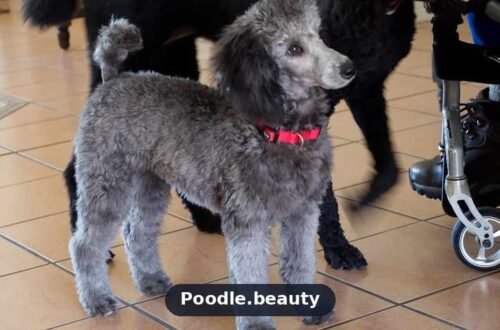
A blue poodle is a genetically black poodle whose coat lightens to a deep charcoal blue grey as it matures. The color is darkest on the ears and in long coat, and softest where the hair is clipped short against the skin.
Blue is a recognized, registerable color, not a defect and not a crossbreed accident. The AKC poodle standard lists blue among the accepted solid colors for all three varieties.
One detail separates blue from the brown family at a glance: the points stay black. A blue poodle keeps a black nose, black eye rims and lips, and dark eyes for life, exactly like its black relatives.
How Breeders Know Before Anything Changes
Breeders are not guessing, and they are not waiting. Several clues show up in the first weeks of life, long before the coat itself turns, and experienced breeders read them together rather than trusting any single one.
- Pale or silvery hairs between the paw pads, visible in the first few weeks while the rest of the puppy still looks jet black.
- A face that clips lighter. When the muzzle is shaved at six to eight weeks, a blue puppy’s new growth comes up smoky charcoal instead of deep black.
- Brownish or rusty highlights across the back in bright sunlight, where a true black puppy’s coat stays neutral.
- Family history. Blues come from lines known to carry fading, and a breeder who watched earlier litters clear can read a new puppy with real confidence.
Each clue on its own is a hint, not a promise. Stacked together in a litter from known lines, they are solid enough that the paperwork can honestly say blue while your eyes still say black.
The Clearing Timeline
Clearing, the gradual lightening, runs slow in blues. Owners expecting a quick reveal usually spend the first year half convinced the breeder was wrong.
For the first six months, most blues still pass for black at a distance. The change hides at the roots: part the coat and the hair near the skin looks a shade softer and warmer than the tips above it.
Between six and eighteen months the disguise slips. The face and feet lighten first after each clip, the body follows unevenly, and many blues look genuinely patchy for a while, with dark old growth and paler new growth side by side.
That patchiness is normal and temporary. It is a coat in the middle of changing, not a skin problem and not poor breeding.
By two years most blues have settled, with slow finishers completing by three. What remains is the finished color: dark slate across the body, the ears usually holding the deepest tone the longest.
Blue, Silver, or Just Grey?
Blue and silver start from the exact same place, a black puppy, and part ways over how far and how fast the fading runs. That single difference explains most of the confusion.
Silver clears early and dramatically. Many silver puppies show a pale face by eight weeks and finish as a bright, light grey by two years. Blue clears late and stops early, ending in charcoal dark enough to be mistaken for black under indoor light.
Grey is the odd one out: it is not a registration color at all. People use the word loosely for any faded poodle, including senior blacks that have greyed with age the way people do. If a seller advertises a grey puppy, ask which registered color they actually mean.
A true black poodle, for contrast, holds its color for life and only greys a little around the muzzle in old age. Our silver poodle guide follows the faster, lighter version of this same story.
The Genetics, in Plain Language
Start with the base coat. The K locus controls whether black pigment covers the whole dog, and dominant black is the standard setting in poodles. A blue puppy is, at this level, simply a black dog.
Layered over that base is the progressive graying influence, the fading gene poodle people talk about most. It switches the coat toward grey gradually with age, strongly in silvers and mildly in blues. The UC Davis Veterinary Genetics Laboratory coat color resources explain how these pigment genes combine, and why the exact gene behind poodle fading is still being pinned down.
You will also see the D locus mentioned in color articles. That gene dilutes black to a blue grey in some other breeds, but poodle blue is generally credited to the graying process, not true dilution. It is a small distinction that explains why breeders trust pedigrees and past litters over any single test result here.
The Poodle Club of America remains the best starting point for buyers who want to understand how color fits into overall breeding quality.
Finding a Blue in Each Size
Blues appear in Toys, Miniatures, and Standards, but not in equal numbers. Standards have the broadest color breeding behind them, so a blue Standard is the easiest of the three to find.
Blue Miniatures are bred regularly, though you may wait through a litter or two for one. Toy blues are the scarcest, mostly because Toy programs are smaller and every breeding choice narrows the color options fast.
Expect a waiting list from any careful breeder, whatever the size. Our overview of poodle colors explained shows where blue sits in the full chart, and the rarest poodle colors roundup puts its scarcity in perspective.
A word on price while you search. Blue is uncommon, not exotic, and it should not add a dramatic premium over a black puppy of the same quality. A steep color markup is marketing, not value.
Living With a Blue Coat
Daily care matches any other poodle: brushing several times a week, a clip every four to six weeks, and the usual attention to ears and teeth. The color specific notes are cosmetic, and there are two.
Sun is the first. Blue coats bleach with heavy sun exposure and can pick up rusty, brownish tones along the back over a summer. The tint grows out with the next clips, but owners who love the cool charcoal shade tend to keep long midday sessions shorter.
Tear staining is the second, and here blue owners catch a break. The reddish marks that shout on a white face blend into charcoal fur, although the skin underneath still needs the same daily wipe to stay healthy.
Medically there is nothing extra to manage. No health condition is linked to the blue color, and blues share the standard poodle health picture. Like every poodle they are low shedding, but no dog is truly hypoallergenic, whatever a listing claims.
Does the Color Change the Dog?
No. Claims that blues are calmer, sharper, or moodier than blacks circulate in breed groups, and none of them have evidence behind them.
Temperament comes from breeding, early socialization, and training, not from pigment. A blue puppy raised beside its black littermates will act like them, because genetically it very nearly is them.
Frequently Asked Questions
How can I tell if my puppy is blue or black?
Check the roots, the paw pads, and the face after its first shave. Silvery hairs between the pads and a smoky face at eight weeks point to blue. Certainty grows with time: a puppy still jet black at the roots past a year is almost certainly a true black.
When will my blue poodle stop changing color?
Most blues finish clearing by about two years old, and slower dogs settle by three. The ears are usually the last area to reach their final shade.
Are blue poodles rare?
Uncommon, yes, but not the rarest poodle color. Blue Standards are reasonably available from color focused breeders, while blue Toys take the longest to find.
Should a blue poodle cost more than a black one?
Not by much. A small difference between litters is normal, but a large premium charged purely for the word blue is a reason to look at other breeders.
Is a blue poodle the same as a grey poodle?
Not exactly. Blue is a registered color with a specific dark charcoal result, while grey is a casual description people apply to any faded or aging coat. Always ask which registered color a seller means.
Do blue poodles have more health problems?
No. The blue color carries no known health penalty, and blues face the same breed predispositions as poodles of any other color. Choose the breeder’s health testing over the shade every time.