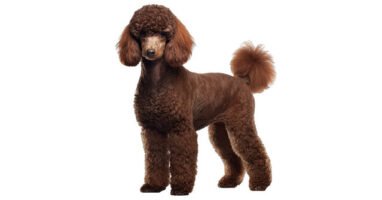
A true red poodle is hard to walk past. The coat runs from bright copper to a deep mahogany that almost glows in sunlight, and it is the richest looking end of the poodle’s warm colors.
Red also comes with more confusion than any other shade. Puppies fade, prices inflate, and listings stretch the truth. This guide covers what red actually is, why deep reds are genuinely difficult to breed, and how to buy one without paying for a story instead of a dog.
What Counts as Red in a Poodle
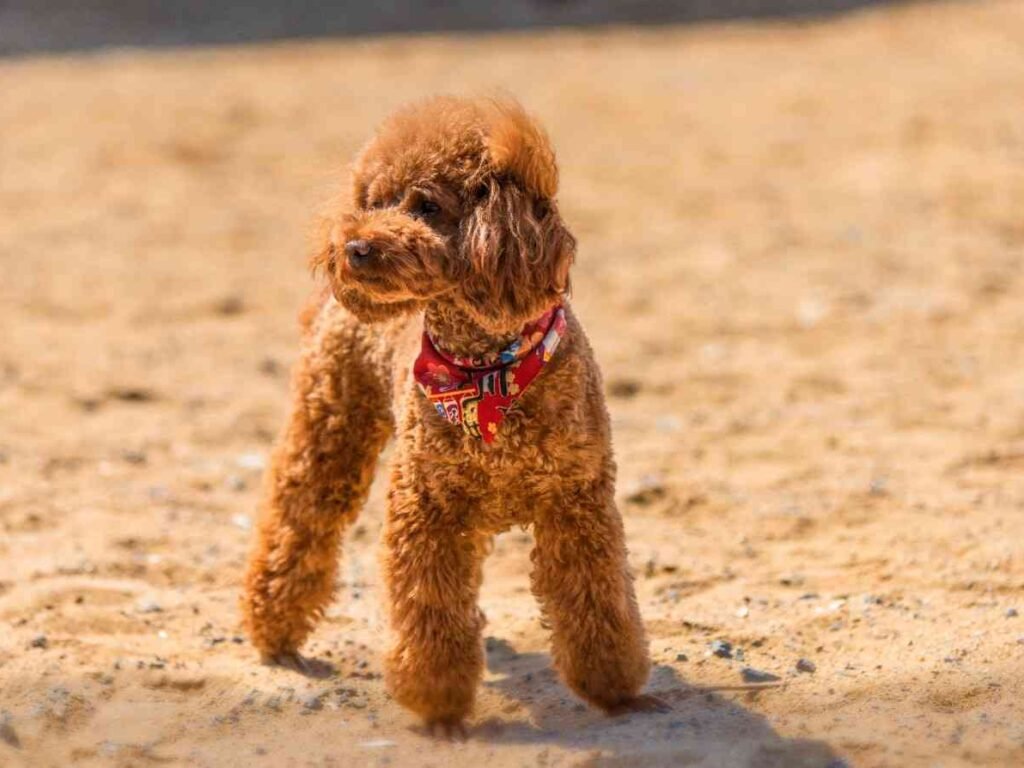
Red is the deepest of the warm colors, a rich reddish brown that sits beyond apricot on the spectrum. Think mahogany, dark rust, or the color of a polished chestnut. Our overview of poodle colors explained places it among the full set of recognized shades.
The range inside red is wide. One dog may be a bright copper red that catches every bit of light, while another is so dark it looks brown until the sun hits it. Both register as red, and both can come from similar breeding.
Red puppies are typically born at or near their darkest. Unlike black poodles, which can turn silver or blue with age through a different process, reds change along their own warm scale, and almost always in one direction: lighter.
The Genetics, in Plain Language
Breeders talk about an intensity factor that decides how strong the warm pigment in a coat looks. In poodles, the gene behind deep red intensity is commonly called the Rufus gene. You can think of it as a volume control for red pigment.
Turned up high, the coat comes out deep mahogany. Turned down, the same basic coloring produces apricot or even cream. This is why red, apricot, and cream puppies can all appear in related lines, and why two apricot parents occasionally produce a surprisingly rich puppy.
The trait behaves in a mostly recessive way, which means both parents need to contribute the high intensity version for puppies to show real depth. One parent carrying a weaker version is enough to wash the color out. That single fact explains most of what follows about breeding and price.
Why True Reds Are Hard to Breed
Producing a deep red puppy is easy to describe and hard to repeat. A breeder needs two parents who both carry strong red intensity, and even then the litter varies. Puppies from the same litter can range from dark red to plain apricot.
Keeping the depth across generations is harder still. Every breeding to a lighter dog risks diluting the intensity, so serious red breeders plan pedigrees several litters ahead and track which pairings hold color. Many promising red puppies also fade, which means a breeder cannot judge a young dog’s adult color for a year or more.
This is the honest reason reds cost more from good breeders. You are paying for years of selective breeding and health testing, not for a paint job. It is also why red sits near the top of most lists of the rarest poodle colors, even though the color itself is fully recognized in the breed standard published by the American Kennel Club.
Fading: The Red Puppy Who Became Apricot
Almost every red fades to some degree, and owners deserve to hear that before they fall for an eight week old puppy’s spectacular color. The lightening is called clearing, and it usually runs from about six months to three years of age.
Some reds hold most of their depth and finish as a rich dark red. Many more clear to a mid red or a deep apricot. A few fade so far that strangers would call the adult dog apricot, and in a sense they would be right, even though the registration still says red.
An honest breeder talks about this openly and shows you the parents’ current colors, not just their puppy photos. If the mother was photographed at nine weeks and never since, ask why. The adult dogs in front of you predict your puppy’s future far better than any baby picture.
Temperament Has Nothing to Do With the Coat
Online, you will read that red poodles are hyper, or stubborn, or somehow wilder than other poodles. There is no evidence behind any of it. Coat color does not determine temperament in poodles, and the red dogs with big personalities are matched by placid reds and chaotic black ones.
What red poodles share with every poodle is the breed temperament: bright, trainable, athletic, and deeply people oriented. They learn fast, they notice everything, and they want a role in the household. Give them training, exercise, and company and they settle beautifully.
Expect to provide roughly 30 to 60 minutes of real exercise a day depending on size, plus mental work. Puzzle feeders, scent games, and short training sessions are not extras for this breed. They are how you prevent a clever dog from redecorating your home.
Coat Care for Reds
The grooming load is the standard poodle load: brush down to the skin several times a week with a slicker brush, confirm with a metal comb, and book a professional groom every 4 to 6 weeks. The ASPCA’s dog grooming guidance is a sound baseline for coat care between appointments.
Reds add one extra consideration, the sun. UV light bleaches red pigment faster than it affects most colors, so a dog that naps in full sun daily will lighten unevenly across the back. Shade access outdoors is a simple fix.
Be skeptical of products promising to restore red. Color enhancing shampoos can deepen the look of a coat slightly for a short time, and some contain dyes you may not want on your dog. None of them changes the pigment the dog actually produces. Good food, parasite control, and regular grooming keep a red coat glossy, and gloss is what makes the color look rich.
Health: Breed Wide, Not Color Specific
No health condition belongs to red poodles alone. They share the breed’s known predispositions, including hip dysplasia, progressive retinal atrophy, Addison’s disease, epilepsy, and bloat in Standards. These are risks to manage through screening and vet care, not reasons to avoid the color.
Ask any breeder for written proof of health testing: hip scores, eye certification, and the other screening the Poodle Club of America recommends for the size you are buying. Then keep up annual vet visits, vaccinations, dental care, and heartworm prevention as your own vet advises.
Price Honesty and Spotting a Bad Listing
Deep red puppies from health tested parents do cost more than average, and that can be legitimate. What should worry you is how the premium gets justified. Color alone, with no health testing behind it, is worth very little.
Watch for these listing tricks:
- Photos with heavy warm filters that make an apricot puppy look red
- Only puppy photos of the parents, never their current adult color
- The word rare used five times while health testing is never mentioned
- Prices far above other breeders with nothing extra to show for it
- Guarantees that the puppy’s color will never change
Dyeing deserves a direct word, because it does happen in the worst corners of the puppy trade. Sellers have been known to tint a lighter puppy’s coat to pass it off as red. Look closely at the skin and the hair near the roots, and compare the ears with the body. Dyed coats often show uneven color, stained skin, or a sharp difference between new growth at the roots and the rest of the hair.
Filters are harder to catch, so insist on a recent unedited video of the puppies with their mother, ideally in natural daylight. Our guide to buying a poodle puppy covers the questions to ask before any deposit changes hands. A breeder doing things properly will welcome every one of them.
Comparing against an apricot poodle from a good breeder is a useful reality check. If a red puppy costs double with the same health testing, same upbringing, and same guarantees, you are paying for marketing. The fair premium covers generations of color breeding on top of health work, and a trustworthy breeder can explain exactly where the money went.
Frequently Asked Questions
Is a red poodle a different breed?
No. Red is a color variation within the poodle breed, found in Standard, Miniature, and Toy sizes. Build, temperament, and health profile are the same as any other poodle.
Will my red puppy stay dark red?
Probably not at full puppy depth. Most reds clear over the first one to three years, finishing anywhere from dark red to deep apricot. Ask to see the parents as adults, because their current color is your best preview.
Why are red poodles so expensive?
Deep red takes generations of selective breeding because both parents must carry strong red intensity, and even then litters vary. From a breeder who also health tests, a premium is understandable. Color with no testing behind it should never command top prices.
Are red poodles more hyper than other poodles?
No. Temperament does not follow coat color. Red poodles have the standard poodle mix of intelligence, energy, and affection, and individual variation comes from breeding and upbringing.
How can I tell if a red puppy listing is genuine?
Ask for recent unedited video in natural light, adult photos of both parents, and written health test results. Check the roots and skin for dye, and be cautious of warm filters, rarity hype, and any promise that the color will never fade.
What is the difference between red and apricot?
Depth. Red is a deep reddish brown, like mahogany, while apricot is a paler golden orange. The two connect through the same intensity genetics, which is why an adult that faded from red can end up looking apricot.



3 Comments on “Red Poodle: Everything You Should Know”