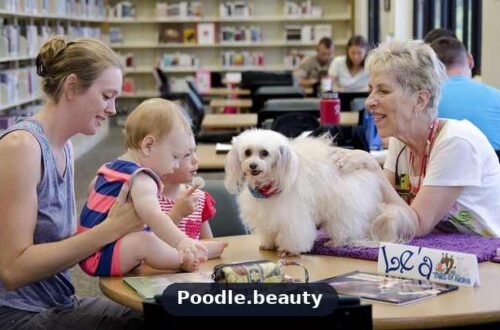
Socialization is not about letting every stranger grab your puppy or dropping her into a pack of adult dogs. It is controlled, positive exposure: letting a young poodle puppy see, hear, and smell the world from a distance she can handle, then pairing it with food and praise.
This plan breaks the work down week by week, starting the day your puppy comes home at eight weeks.
The Window Nobody Warns You About
Between roughly three and fourteen weeks of age, a puppy’s brain is set up to accept new things as normal. Puppies investigate first and worry later, and what they file away in this period tends to stick for life. After the window closes, novelty gets treated with suspicion, a sensible response for a wild animal and a stressful one for a pet dog.
The American Veterinary Society of Animal Behavior (AVSAB) calls the first three months of life the primary socialization period. Its position statement on puppy socialization says puppies should meet as many new people, animals, and environments as can be managed safely, even before the vaccine series is complete.
That creates a real tension, because the window is mostly closed by the time the vaccine series finishes at around sixteen weeks. AVSAB’s reasoning is blunt: behavior problems are the leading cause of death in dogs under three, far ahead of infectious disease. The answer is neither recklessness nor a bubble, but socializing carefully in low risk settings, with your vet’s guidance on local risk.
Staying Safe Before the Shots Are Finished
Risk management is mostly about where little feet touch the ground. Until your vet says otherwise, keep your puppy off dog park ground, pet store floors, and busy sidewalks where unknown dogs toilet. A friend’s garden with one healthy, vaccinated adult dog is a different level of risk entirely.
Carrying is your best tool in these weeks. A puppy in your arms or watching from a clean blanket on your lap still sees traffic, hears sirens, and watches children play, all with zero paw contact. Short car rides and friends’ homes cover a surprising amount of ground.
Puppy classes are the one exception worth making early. AVSAB says puppies can start a well run class at seven to eight weeks, after a first deworming and a first set of vaccines at least seven days before the first session. Look for cleanable floors, proof of vaccination at the door, and short, supervised play.
Weeks 8 to 10: Build the Home Base
Your puppy has just left her litter, so the first stage is about safety and routine, not a social marathon. Keep new experiences to five or ten minutes at a time, and let her sleep: puppies this age need eighteen to twenty hours a day, and an overtired puppy learns badly.
Start with household sounds at low volume: the vacuum in another room, the hair dryer she will meet at the groomer, a dropped pan, the doorbell. Feed a small treat as each sound happens, so noise starts to predict good things. Rotate surfaces under her feet too: tile, carpet, grass, a baking tray, a wet towel.
Invite a few calm visitors, one or two at a time, and let the puppy choose whether to approach. Ask guests to crouch sideways and ignore her until she comes over, then feed a treat and stroke her chest rather than pat the top of her head.
Children should sit on the floor and let the puppy climb into a lap, with an adult close enough to step in. This is also a good stage to begin the foundation skills in our guide to how to train a poodle puppy, in very short sessions.
Weeks 10 to 12: Small Trips, Mostly Carried
By ten weeks, most puppies are ready for short outings in your arms. Try a quiet cafe patio, the street outside a school at pickup time watched from across the road, or a garden center where she rides in the cart on a blanket. Five calm minutes of watching beats an hour of being passed around.
Book a happy visit at the vet clinic: no needles, no exam, just treats from the staff, a quick stand on the scale, and home again. Two or three of these make real appointments far easier later. Do the same at the groomer, because a poodle will visit that salon every four to six weeks for life.
Weeks 12 to 16: Feet on the Ground
As vaccines build up, and with your vet’s go ahead, paws can start meeting pavement in lower risk places: quiet residential streets, a friend’s driveway, the edge of a park where you can keep distance from unknown dogs. Let her watch dogs from across the street and feed treats for looking calmly, since distance keeps watching educational instead of frightening.
This is the ideal stage for a structured puppy class if you have not started one. The AKC’s guide to socialization timing makes the same point good breeders do: quality beats quantity, and puppies should learn the world is safe rather than be swamped by it. Choose reward based classes only, and walk out of any class using leash corrections on babies.
Start one to one introductions with known, vaccinated, puppy savvy adult dogs on neutral ground. A good adult will sniff, offer a play bow, and wander off when the puppy gets silly. Skip the dog park entirely at this age: one bad pileup can undo weeks of careful work, and you control nothing there.
Certified trainer Michele Lennon of How To Train A Dream Dog walks through exposure training in the video below, including working safely before vaccines are complete.
The Exposure Checklist
Work through categories, not a magic number of experiences. A popular benchmark is meeting a hundred different people by twelve weeks, and while variety matters more than the count, it shows the scale of the job.
- People: men and women, children of different ages, people wearing hats, sunglasses, beards, or uniforms, plus people using wheelchairs, walking sticks, and umbrellas.
- Dogs: calm, vaccinated adults of different sizes and colors, and supervised puppy classmates.
- Places: the vet waiting room, the groomer’s salon, a cafe patio, a friend’s house, and a garden center.
- Sounds: thunder and fireworks recordings played quietly, traffic, distant sirens, the vacuum, the hair dryer, and doorbells.
- Surfaces and objects: grass, gravel, sand, wooden decks, stairs, elevators, and automatic doors.
- Handling: paws squeezed gently, ears looked into, teeth and gums touched, collar held, and being lifted onto a table.
Handling deserves extra time with this breed, because a poodle is brushed, clipped, and bathed for life. Spend two or three minutes a day on a table: touch a paw, treat; run a brush down her back, treat; lift a lip, treat.
Puppies raised this way tend to stand quietly for grooming instead of fighting the clippers. Our guide to grooming a poodle at home shows what that adult routine involves.
Poodle-Specific Notes
Poodles are observant and sensitive, and many notice small changes in their surroundings faster than their owners do. That sensitivity is a gift in training, but it also means a puppy can tip from curious to over aroused very quickly. Barking, leaping, mouthing, and an inability to settle mean the session is too much, not that you have a bold puppy.
Watch the puppy, not the checklist. Always end a session while she is still coping well.
Expect a second fear period in adolescence, often between six and fourteen months, when things she handled happily at ten weeks suddenly look suspicious. This is normal development, not proof your early work failed. Go back to distance and treats, avoid forcing encounters, and the confidence usually returns.
Socialization does not stop at sixteen weeks either. It becomes maintenance: regular walks in varied places, occasional new experiences, and the same gentle handling at home.
When Your Puppy Gets Scared
It will happen. A bin lid bangs shut, a tall man in a hat leans over her, and your puppy is suddenly behind your legs with her tail tucked. The right move is boring: add distance until she can look calmly again, let her watch, feed a few treats, and leave on that note.
Skip the old debate about whether comforting a scared puppy makes things worse. Fear is an emotion, not a behavior you can accidentally reward, so calm petting and a cheerful voice do no harm. What causes problems is dragging her closer or luring her forward with food she is too frightened to enjoy, which can poison the treat and her trust in you.
If the same fear keeps showing up after a week or two of gentle work, or your puppy is frightened by ordinary household life most days, talk to your vet. Persistent fear is worth catching early, and it often travels with problems like separation anxiety in poodles.
Missed the Window? Older Puppies and Rescues
Plenty of poodles arrive at five months, a year, or older with very little early exposure, including most rescues. The plan still works then; it just runs slower and leans on desensitization: smaller steps, more distance, more repetition. An older puppy is not a lost cause, and treating her like one becomes a self fulfilling prophecy.
Start with the home base stage whatever her age, then work outward over weeks instead of days. Pick one calm adult dog as a regular walking partner and one quiet location to master before adding another. Many rescue poodles blossom within two to three months of predictable, gentle exposure.
Remember, too, that the earliest socialization happens before you ever meet your puppy, with whoever raised the litter. Asking what those first weeks looked like is one of the smartest questions a buyer can ask, and our guide to buying a poodle puppy covers what to ask.
Frequently Asked Questions
Can I take my puppy out before her vaccines are finished?
Yes, with care. Carry her, stick to clean homes and gardens, and choose a puppy class that requires a first vaccine at least seven days before starting. Keep her off dog park ground until your vet clears her.
Are dog parks a good way to socialize a puppy?
No, because you cannot control the dogs, the hygiene, or the play styles there, and one frightening pileup can set a sensitive puppy back weeks. One to one meetings with known vaccinated dogs build the same skills with far less risk.
My puppy barks at everything on walks. Is the socialization working?
Probably the opposite. Barking and lunging usually mean a puppy is over threshold and too close to the trigger. Add distance until she can notice things quietly, reward that calm attention, and close the gap gradually.
Is it too late to socialize a six month old puppy?
No, it is not. The early window makes learning faster, but dogs keep learning all their lives, and an older puppy mainly needs smaller steps and more patience. If fear is severe or worsening, ask your vet about a behavior referral.
Do I really need a puppy class?
Not strictly, but a good class compresses a lot of safe exposure into a few weeks: new puppies, new people, a novel room, and a trainer watching body language. If local classes are rough or correction based, run this plan yourself instead.